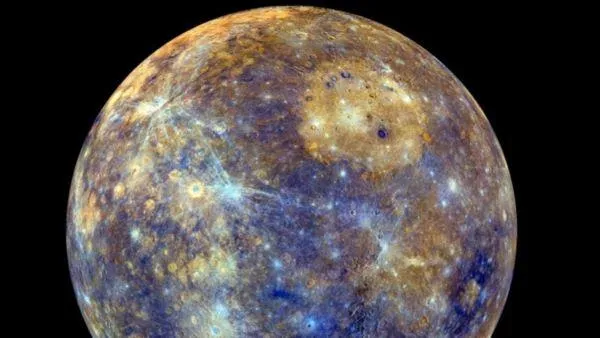
New scientific data suggest that Mercury may remain geologically active even now, despite its small size and lack of atmosphere. For a long time, this smallest planet in the Solar System was considered “dead” in terms of geology, but the results of recent studies are changing this perspective.
This is reported by Finway
Study Details and Key Findings
Researchers led by Valentin Bickel from the University of Bern, in collaboration with the Astronomical Observatory of Padua, analyzed over 100,000 images of Mercury obtained during NASA’s MESSENGER mission from 2011 to 2015. By using machine learning algorithms, the scientists identified 402 bright streaks on the planet’s surface, significantly exceeding previous estimates of their number.
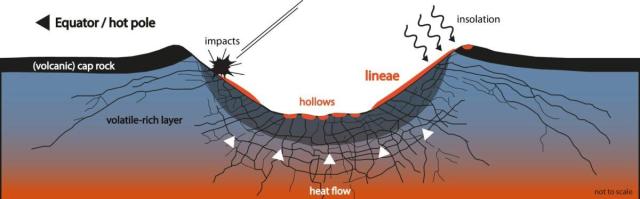
These streaks, known as “slope lines,” are primarily located on sunlit slopes of impact craters. Their preservation on Mercury, unlike other celestial bodies in the Solar System, indicates that the process of their formation may still be ongoing. This suggests the presence of heat and volatile substances—chemical elements and compounds that can evaporate from the planet’s interior.
“Volatile substances could be rising to the surface from deeper layers through networks of cracks in the rock formed during previous impacts,” explains Bickel. “Most of the streaks seem to be associated with bright depressions—so-called hollows, which also arise from the release of volatile substances.”
Further Research and Significance of the Discovery
If the proposed hypothesis is confirmed, it would mean that the internal evolution of Mercury is ongoing, despite its age of approximately 4.5 billion years. New data from the BepiColombo mission—a joint project of the European Space Agency (ESA) and JAXA—are being used for further exploration of the planet. This mission is already sending detailed images of the planet’s surface, which will allow for verification of the findings.
The study’s results, published in the journal Nature Communications Earth & Environment, significantly alter our understanding of the smallest planet in the Solar System. Mercury may conceal one of the most striking geological surprises, demonstrating that even bodies without an atmosphere can remain dynamic and change over time.