

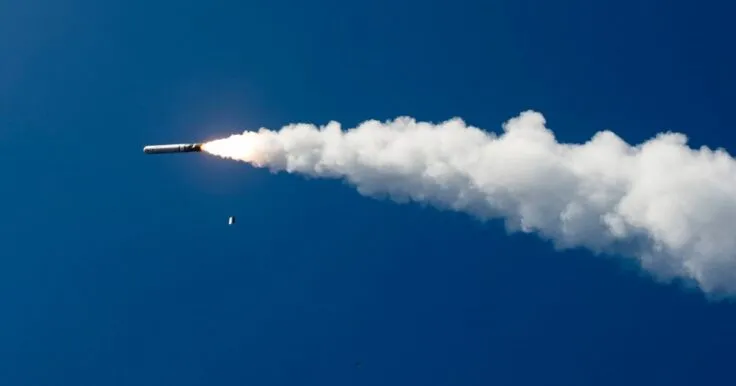
The U.S. Department of Defense is considering the possibility of canceling deliveries of multi-role long-range precision-guided Tomahawk cruise missiles to Germany. The rationale behind this decision stems from concerns within the Pentagon that Russia may interpret the transfer of these missiles as an escalation of the conflict in Europe.
This is reported by Finway
Security risks and political pressure
American officials express concern that the deployment of modern missiles in central Europe could provoke a harsh response from the Kremlin. If the plans of U.S. President Donald Trump’s administration to transfer the missiles are realized, Moscow may take corresponding actions. This could lead to the cancellation of agreements made during Joe Biden’s presidency, jeopardizing Germany’s defense capabilities and its ability to modernize its armed forces.
“The potential refusal of ‘Tomahawks’ particularly worries German officials who are eager to modernize their faltering armed forces to serve as a bulwark against Russian aggression,” the publication writes.
Strategic balance in Europe and reduction of U.S. military presence
The publication notes that the possible cancellation of deliveries is part of a broader strategy by Washington to reduce its military presence in Europe. Among such steps is the cancellation of the deployment of thousands of American troops in Germany and the withdrawal of certain resources, which Berlin has already felt after the recent troop reduction.
In addition to geopolitical risks, the Pentagon emphasizes issues with its own weapon stockpiles. During recent combat operations against Iran, the U.S. used a significant number of Tomahawk and Patriot missiles. Defense Secretary Pete Gage stated that replenishing lost stockpiles could take “months and years.”
Amid such changes, Germany risks being left without modern defense systems, while Russia has already deployed Iskander missiles in Kaliningrad capable of carrying nuclear warheads. Additionally, medium-range Oreshnik missiles are stationed in Belarus, which can reach any point in Europe within minutes.
In May, it became known that President Trump plans to reduce the number of American troops in Europe, which could significantly impact NATO’s ability to respond promptly in the event of an attack.