

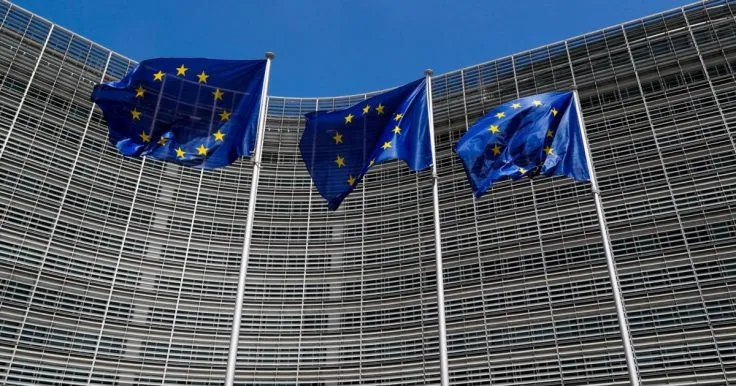
The European Commission is considering an initiative to limit the provision of temporary protection to Ukrainian men of conscription age within the European Union. This was reported by European Commissioner for Home Affairs Magnus Brunner after a meeting of the EU Council in Luxembourg, where this issue was discussed by member states.
This is reported by Finway
Approach to extending and limiting temporary protection
According to Brunner, EU members have reached an agreement on the necessity of extending the temporary protection for Ukrainian citizens until 2028. However, some states have advocated for exceptions for men aged 23 to 60 who are subject to conscription. The Commissioner emphasized that this issue is also supported by the Ukrainian side.
“Extending temporary protection is a key issue. There are different approaches. One of them is the exclusion of men aged 23 to 60, that is, those of conscription age. And this is also what the Ukrainian side wants,” Brunner stated.
The Deputy Minister of Migration and International Protection of Cyprus, Nicholas Ioannides, clarified that all EU countries agreed on the necessity of extending temporary protection, but some are willing to discuss the possibility of changing its scope. At the same time, he noted that there are concerns about potential risks and the need to implement safeguards in case of changes.
Positions of individual countries and next steps
The European Commission is preparing to present an official proposal regarding the future of the temporary protection directive in the coming weeks. Special attention will be paid to the opinions of those states that have accepted the most Ukrainians, including Poland, Germany, the Czech Republic, Austria, and the Baltic states.
Before the meeting, the ministers of Germany, Sweden, and Poland publicly expressed support for limiting automatic temporary protection for Ukrainian men subject to mobilization. In particular, Sweden’s Migration Minister Johan Forssell noted that it is important for more men to remain in Ukraine and participate in the defense of the country. Germany’s Interior Minister Alexander Dobrindt emphasized that Berlin supports the continuation of protection, but “under changed conditions,” so that men of conscription age do not fall under automatic protection. Poland also advocated for such restrictions.
Ukrainian President Volodymyr Zelensky, during his visit to Germany in April 2026, emphasized that Ukrainian and German services must jointly address the issue of returning men of mobilization age who have left the country in violation of Ukrainian legislation. According to him, this concerns the issue of “rotation and fairness.”
With the onset of the full-scale aggression of the Russian Federation against Ukraine and the introduction of martial law, a ban was established on the departure of men aged 18 to 60 who are subject to mobilization. In the summer of 2025, Ukraine allowed only those men who are younger than 23 years to leave.
So far, the European Commission has not published a final proposal regarding the status of Ukrainian men of conscription age in the EU. At the same time, discussions mainly concern those who are currently arriving in the EU, rather than those who have already received temporary protection status, as noted by European diplomats and officials.