

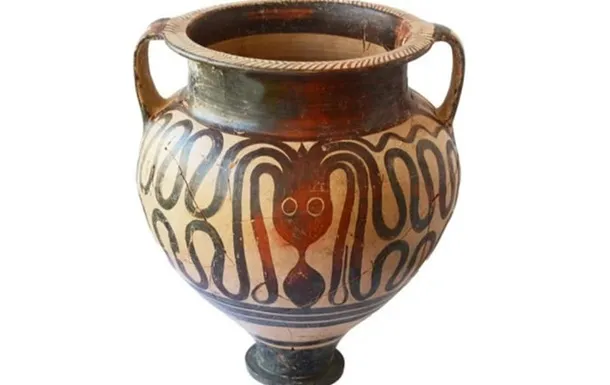
In the port city of Hala Sultan Tekke in Cyprus, archaeologists have made an exceptional discovery — they unearthed rich tombs from the Late Bronze Age that have remained almost untouched since the 14th century BC. These burials were filled with valuable artifacts from various corners of the Ancient World, indicating the high social status of the buried individuals and their international connections.
This is reported by Finway
A Find That Survived Millennia
The tombs have been preserved in nearly pristine condition due to a ceiling collapse that, in ancient times, blocked access to grave robbers and isolated the burial site from the outside world. This allowed modern researchers to see Bronze Age burial rituals in their unchanged form for the first time in thousands of years.
During the archaeological excavations, an ancient well was also discovered, likely decommissioned due to groundwater salinization. However, the main focus is on two chamber tombs, which have become true “time capsules” — they contained a large quantity of ceramics, jewelry, tools, and luxury items.
International Contacts and Analysis of the Burials
Among the artifacts found were items from Greece, Crete, Egypt, the Aegean Islands, as well as materials originating from much more distant regions. Particularly valuable are amber from the Baltic region, gemstones from Afghanistan, and elements that indicate contacts with India. Some of the ceramic vessels were made from alabaster, while luxurious jewelry was crafted from ivory. All these findings confirm the existence of extensive trade routes during that time.
“Anthropological analysis showed that the tombs were used over several generations. The buried individuals likely belonged to the ruling elite of the city. Most of them died at a relatively young age — before 40 years, which provides new insights into the living conditions of that time.”
The city of Hala Sultan Tekke, founded as early as the 17th century BC, covered an area of about 25 hectares and held strategic significance in the Mediterranean due to its copper mining and export. This ensured the attraction of merchants and the development of international trade between the 15th and 13th centuries BC.
Researchers plan to conduct DNA analysis on the human remains from the burials. This is expected to help more accurately determine the origins of the buried individuals, their familial connections, level of mobility, and the role of Cyprus as an important hub of intercontinental exchange during the Bronze Age.