

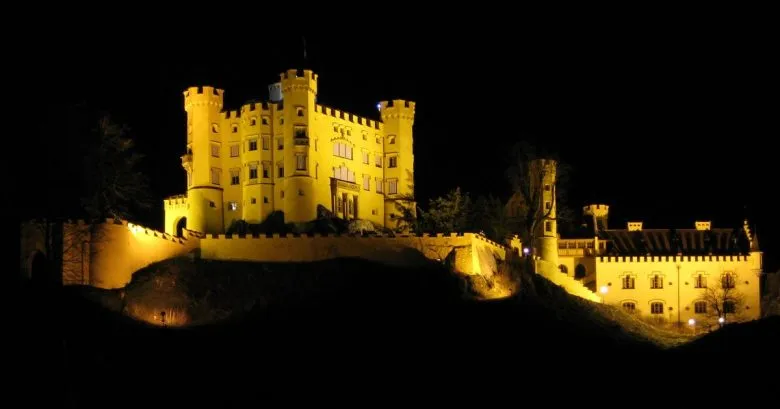
Archaeological excavations at Hohen-Aschau Castle have fundamentally changed our understanding of its history, revealing that people lived here as far back as 4000 years ago – significantly earlier than the first written records of the medieval fortress.
This is reported by Finway
Bronze Age Finds and New Archaeological Discoveries
During the excavations in the castle’s courtyard, archaeologists uncovered fragments of pottery dated to around 2300 BC, which represent the earliest evidence of human activity at this site. These artifacts indicate that the hilltop where the castle now stands was inhabited during the Bronze Age. Previously, items from this era had only been found in the nearby lowlands, but not on the hill itself, making this discovery particularly valuable for researchers.
“This find is the first clear evidence that people settled directly on the hilltop, rather than just in the surrounding areas.”
It has been established that the complex terrain did not deter the first settlers: they filled the cracks in the rocky ground with a mixture of sand and clay, creating a suitable area for construction. The high hill overlooking the Prien Valley, with its natural defensive advantages and excellent visibility, likely attracted people for millennia.
The Evolution of the Castle and the Layered History
Hohen-Aschau Castle is considered one of the largest in Bavaria. It was built in 1165 and has changed owners multiple times over the centuries. During the height of the Freyberg family’s influence (until 1606), the castle was remodeled in the Renaissance style, and later in the Baroque style under the Preysing family. After losing its administrative significance in the 19th and 20th centuries, the building was restored and used as a hospital and military facility. Since 1960, the castle has operated as a recreational center with limited access.
The excavations, which began in late 2025 during maintenance work, were conducted with the participation of specialists from construction management, cultural heritage protection services, and a private archaeological company. Among the new finds are fragments of pottery from the 9th to 11th centuries, remnants of a dismantled furnace, although its purpose remains unclear. This further proves that the castle’s territory was used long before its mention in documents.
The research also uncovered remnants of walls, ancient cobblestones, and traces of a rectangular structure from later periods. Numerous fragments of painted plaster indicate decorative interior finishes in the past, while pieces of carved stone likely belonged to an arcade added in subsequent eras.
The first written mentions of the fortress at this location date back to the late 12th century. However, archaeological discoveries confirm that the hill was inhabited for many centuries, and its natural advantages remained relevant to various generations of inhabitants.
New archaeological data are changing perceptions of Hohen-Aschau Castle, proving that this location has been significant to people for a long time, and its history extends far beyond the medieval period.