

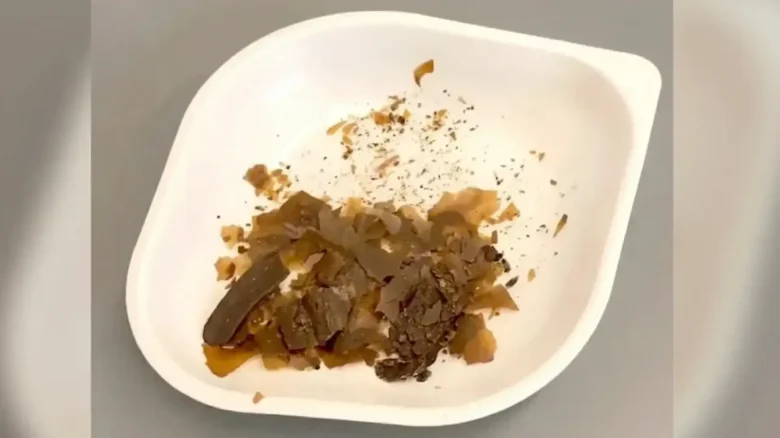
Archaeologists have obtained material evidence for the first time that in Ancient Rome, feces were indeed used as a medicinal remedy. During the investigation of a medical vial from a tomb in Pergamon (located in modern-day Turkey), one of the key medical centers of the Roman Empire, scientists discovered a dark brown sediment that turned out to be human feces. Such preparations have been repeatedly mentioned in ancient medical treatises.
This is reported by Finway
Ancient Roman Recipes: From Theory to Practice
A glass vessel with a narrow neck, found decades ago, was re-identified in the collections of the Bergama Museum. Of the seven vials discovered in the tomb, only one preserved its unique contents, which became a sensation for researchers. Pergamon in the 2nd–3rd centuries AD was a leading center of medical science, and its resident Galen of Pergamon is considered one of the most influential doctors of antiquity. In his works, Galen described, among other things, medicinal mixtures based on feces and herbs to combat inflammation; however, until now, scientists had no evidence that such preparations were actually produced and used in practice.
Scientific Analysis and Discovery of Chemical Composition
Scientists conducted a thorough analysis of the sediment from the vial using modern gas chromatography methods along with mass spectrometry. The study revealed the presence of coprostanol and 24-ethylcoprostanol in the substance—biomarkers that unequivocally indicate the human origin of the feces. Additionally, carvacrol, a compound found in thyme and oregano, was discovered in the sediment. This supports the accounts of ancient authors regarding the addition of aromatic herbs by physicians to reduce the specific odor of the medicinal preparation.
“The mixture fully corresponds to Galen’s pharmacological recipes. This is the first case where ancient texts have received direct chemical confirmation,” emphasized study author Jenker Atilla.
Historians note that the use of the so-called “pharmacy of dirt” has roots dating back to Mesopotamia and Ancient Egypt. Galen used both human and animal feces, sometimes even specifically selecting feces based on a person’s diet, believing their effectiveness varied.
Today, medicine employs similar methods only in the form of strictly controlled fecal microbiota transplantation for the treatment of severe intestinal infections. However, ancient practices now have real confirmation, although their effectiveness remains beyond the scope of modern scientific evaluation.