

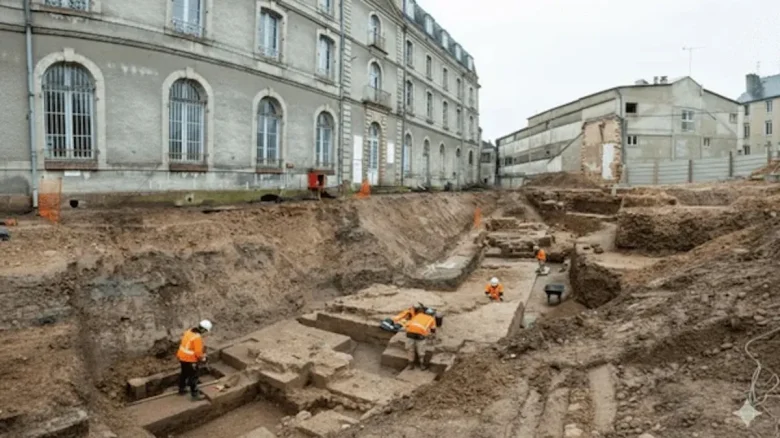
In the French city of Vannes, archaeologists have made a unique discovery: beneath the modern Lagorce hotel, the remains of a medieval castle that had been buried for over six centuries were found. The discovery of the well-preserved ruins has come as an unexpected sensation for researchers and the local residents.
This is reported by Finway
History and Architectural Features of the Castle
During the archaeological excavations, researchers determined that the discovered structure is the Château de l’Ermin, a residence built in the 1380s on the orders of Duke of Brittany John IV, also known as John IV the Conqueror. The castle was a significant political and symbolic center of the region during the medieval period.
Archaeologists examined the monumental structure, which measures approximately 42 meters in length and 17 meters in width. The massive stone walls, the water moat surrounding it, and the powerful square tower indicate the defensive and representative nature of the castle. Analysis of the building materials proved that the structure was constructed in a single phase, indicating substantial resources from the patron and the involvement of experienced specialists from the late 14th century.
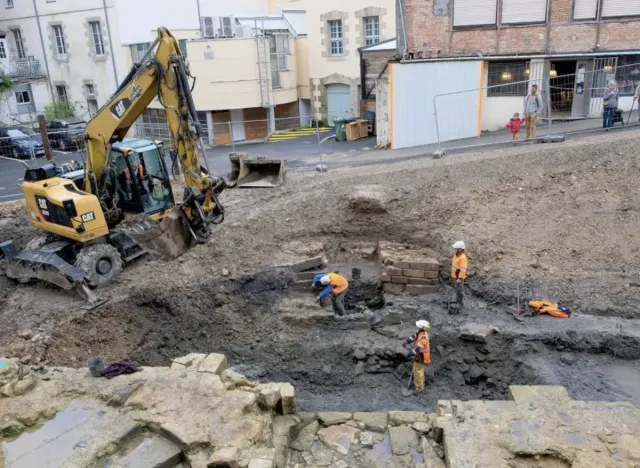
Artifacts and Significance of the Discovery
The moist soil in the moat around the castle created rare conditions for the preservation of organic materials. As a result, archaeologists were able to find items that typically do not survive to the present day: jewelry, coins, padlocks, kitchenware, and even wooden remnants of barrels. These artifacts provide a better understanding of the daily life, economy, and lifestyle of the castle’s 14th-century inhabitants.
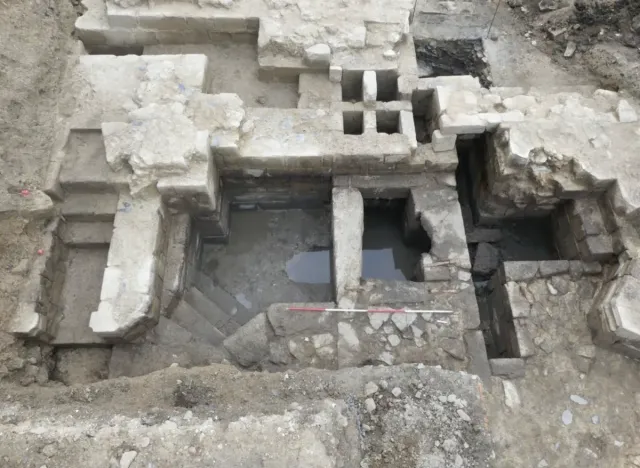
“The discovery of the Château de l’Ermin not only deepens our knowledge of the history of Vannes but also demonstrates how many more medieval secrets may be hidden beneath modern urban development.”
Researchers are convinced that this finding will be an important contribution to the study of French medieval architecture and history, as well as a stimulus for further archaeological research in cities with rich historical backgrounds.