

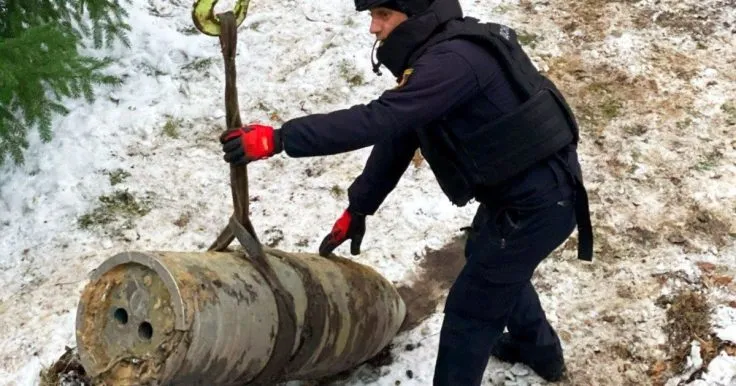
On the night of May 28, Russian troops launched a large-scale attack on the territory of Ukraine, using the Kinzhal air-launched ballistic missile and 147 strike drones of various types. This was reported by the command of the Air Forces.
This is reported by Finway
Details of the nighttime attack: launch directions and consequences
According to military sources, the Kinzhal missile was launched from the airspace of the Lipetsk region, while the drones were launched from the territories of Bryansk, Kursk, and Oryol regions, Millerovo, Primorsko-Akhtarsk, as well as from the occupied areas of Crimea, including Hvardiyske and Chаuda. Among the drones used were Shahed, Gerbera, Italmas, and other modifications.
As a result of the work of the Ukrainian air defense, 138 enemy drones were destroyed. At the same time, hits from the Kinzhal air-launched ballistic missile and nine strike drones were recorded at seven different locations across the country. Additionally, debris from the downed devices fell on six more sites.
“Hits from the Kinzhal air-launched ballistic missile and 9 strike UAVs were recorded at 7 locations, as well as debris from downed devices at 6 locations,” the report states.
Shelling of civilian infrastructure and signs of genocide
On the eve, the Air Forces warned about the movement of a missile towards the Khmelnytskyi region, likely towards Staro Konstantinov. The head of the regional administration, Serhiy Tyurin, reported that there was no information about casualties, injuries, or destruction.
Russia systematically uses various types of weapons to attack Ukrainian cities and civilian infrastructure – in particular, strike drones, missiles, guided aerial bombs, and multiple launch rocket systems. Ukrainian authorities and the international community consider such strikes to be war crimes, emphasizing the targeted nature of the attacks against the civilian population.
The shelling of vital facilities, healthcare institutions, energy, water supply, and communication systems, which deprive people of basic living conditions, has signs of genocidal actions. Experts and human rights defenders note that Russia is committing acts that fall under the definition of genocide: the destruction of Ukrainians as a nation, the persecution of pro-Ukrainian citizens in occupied territories, the deportation of children, the destruction of carriers of Ukrainian culture and identity, as well as the targeted theft of historical artifacts.
The UN Convention on the Prevention and Punishment of the Crime of Genocide, adopted in 1948, obliges the participating countries (currently 149) to prevent acts of genocide and to punish them in both peacetime and wartime. According to the Convention, genocide is actions committed with the intent to destroy, in whole or in part, a national, ethnic, racial, or religious group as such: killings, causing serious bodily harm, creating living conditions intended to destroy, preventing births, forcibly transferring children, and publicly inciting such actions.
The leadership of the Russian Federation denies accusations of targeted strikes on civilian infrastructure, despite numerous facts of the destruction of hospitals, schools, kindergartens, energy, and water facilities as a result of Russian attacks.