

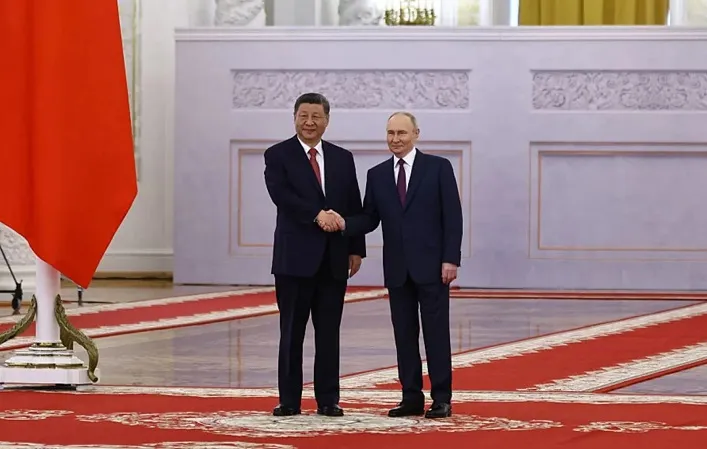
As of the end of the first nine months of 2025, trade volumes between China and Russia have decreased to $163.6 billion, which is 9.4% less compared to the same period in 2024. Meanwhile, Moscow’s dependence on Beijing continues to strengthen.
This is reported by Finway
Decline in Exports and Imports Due to Falling Energy Prices
China’s exports to the Russian Federation decreased by 11.3%, totaling $73.6 billion. Conversely, Russian exports to China fell by 7.7% to $90 billion. The main reason for this decline was cheaper energy resources. The value of Russia’s energy exports to China dropped by 18.9% (by $14 billion). The physical volume of oil supplies decreased by 8.1%, while in monetary terms, it fell by 21%, linked to the drop in Brent prices. Despite this, the Russian Federation’s economy continues to rely heavily on the export of energy resources and metals, the lion’s share of which is directed to China. This increases Russia’s vulnerability to changes in demand in the Chinese market and deepens its dependence on Beijing.
Sanctions, Changes in Logistics, and Loss of Leadership
Supplies of Russian oil to China via the Arctic Ocean are increasingly slowing down, particularly due to the sanctions imposed. This year, routes from Russian ports in the Arctic and the Baltic Sea to northern China via the Northern Sea Route have become three weeks longer compared to last year.
In particular, oil exports decreased by 8.1% in physical volumes and by 21% in monetary terms due to the drop in Brent prices.
In November, China significantly reduced its imports of Russian oil, replacing it with raw materials from Saudi Arabia. Currently, imports of Russian oil stand at 926,000 barrels per day, which is 36% less than in October when the figure reached 1.45 million barrels per day. In contrast, imports from Saudi Arabia increased to 1.78 million barrels per day, up from 1.2 million in October. Thus, in November, Russia will lose its leadership among oil suppliers to China in favor of Saudi Arabia.
At the same time, Russian “Gazprom” has intensified work on the construction of the new gas pipeline “Power of Siberia 2” to China. The project involves transporting 50 billion cubic meters of gas per year and is a key hope for Russia to partially compensate for lost exports to Europe. The company’s engineers are already working on technically complex and expensive projects necessary for launching this route.