

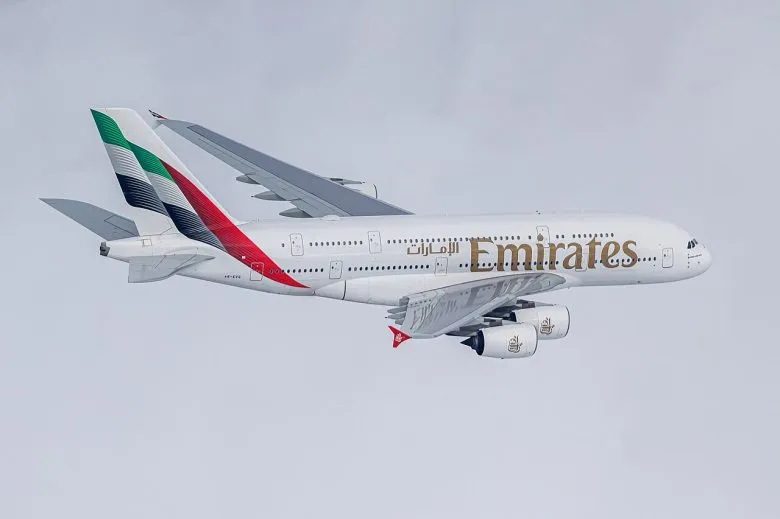
One of the world’s largest airlines, Emirates, has resumed regular flights to its hub in Dubai; however, the demand for air travel to the United Arab Emirates remains critically low. This is due to the escalation of the military situation in the region, which has significantly impacted passenger traffic from Europe and the USA.
This is reported by Finway
Flight Load Factors from Europe and the USA at Record Lows
According to internal statistics from Emirates, the current load factors for flights from key European cities and the United States do not exceed 5–20%. The most significant drop in demand is observed on routes from Prague, Budapest, and New York, where a large portion of seats on planes remains unfilled. Some flights, such as those on the wide-body Airbus A380, carried fewer than 35 passengers, despite the aircraft’s maximum capacity exceeding 500 people. On certain routes, such as Paris, the number of passengers barely exceeded the number of crew members.
“And planes from New York are returning with only one-fifth of tickets sold.”
At the same time, there is a contrasting trend on return routes—from Dubai to Europe and the USA. Here, demand for tickets is increasing as many people are eager to leave the region. Due to the limited number of available flights, seats are being booked in advance, and thousands of no-shows are recorded daily. Compensation programs and free date changes are available for passengers.
The Role of Air Freight in Regional Logistics is Increasing
After the closure of the Strait of Hormuz to maritime transport, air freight has become the primary channel for delivering goods to the UAE, especially perishable products. Emirates has increased its use of Boeing 777 aircraft, which have a higher cargo capacity compared to the Airbus A380. At the same time, the operation of airports in the region remains complicated due to security risks: on March 16, Dubai International Airport was forced to suspend operations for seven hours due to an incident involving a drone that caused a fuel tank fire. Flights resumed only on a limited schedule.
Amidst this challenging situation, competition among airlines is intensifying. Etihad Airways and Qatar Airways have also resumed flights, but they are operating on a reduced schedule, focusing their efforts on evacuating passengers who were unable to depart earlier. Emirates currently maintains its leadership in the number of flights, offering several times the capacity of its competitors. The further development of the market will depend on the stabilization of the security situation and the restoration of passenger confidence in air travel.