

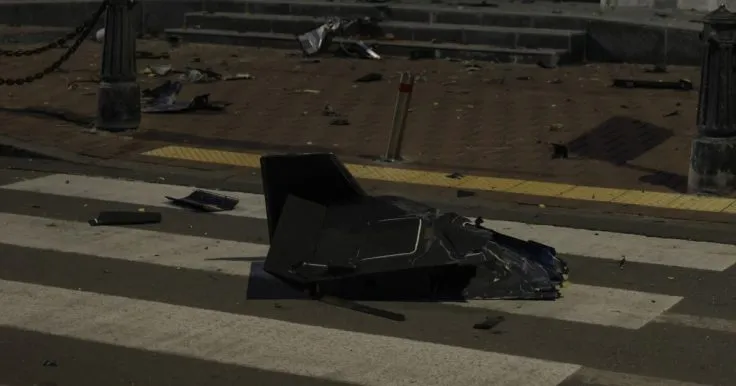
On the night of May 25, Russian forces launched a massive attack on Ukrainian territory, using 262 strike drones of various modifications. According to the Air Force Command, the main launch directions of the drones included Oryol, Kursk, Shatalovo, Bryansk, Millerovo, Primorsko-Akhtarsk, as well as Hvardiyiske in occupied Crimea.
This is reported by Finway
Results of Air Defense Operations
As of 08:00 in the morning, the Ukrainian air defense managed to destroy or suppress 246 enemy drones, including Shahed, Gerbera, Italmas, and other types of drones. There are reports of hits from 10 strike drones in nine different locations, as well as debris from drones falling in seven locations across the country.
“According to preliminary data, as of 08:00, the air defense has shot down/suppressed 246 enemy UAVs of the Shahed, Gerbera, Italmas types and other types of drones in the north, south, and east of the country,” the statement said.
The Air Force Command also emphasizes that the attack is ongoing, and Russian drones still remain in the sky, so the threat has not passed.
Humanitarian Consequences and International Reaction
Russian military forces systematically use various types of weapons — strike drones, missiles, aerial bombs, and multiple launch rocket systems — to attack Ukrainian cities and civilian infrastructure across all regions of the country. Ukrainian authorities, together with international organizations, classify such strikes as war crimes of the Russian Federation and emphasize their targeted nature.
Shelling of life support systems, hospitals, and other critical facilities aimed at depriving the population of electricity, water, heat, communication, and medical assistance is viewed as signs of genocidal actions. Human rights experts and genocide researchers note that Russia, during its large-scale war, employs all possible means that may fall under the definition of genocide, including:
- public statements denying the existence of the Ukrainian people and calls for their destruction;
- targeted strikes on civilian infrastructure;
- persecution and elimination of individuals with pro-Ukrainian positions in occupied territories;
- extermination of educators, artists, and bearers of Ukrainian culture;
- changing the identity of children through deportations and corresponding education;
- destruction of Ukrainian books and theft of historical artifacts.
The UN Convention on the Prevention and Punishment of the Crime of Genocide, adopted in 1948 and ratified by 149 countries, obliges states to prevent acts of genocide and punish them in both peacetime and wartime. Genocide is defined as actions aimed at the complete or partial destruction of a national, ethnic, racial, or religious group.
Despite numerous evidence, the leadership of Russia continues to deny that its armed forces deliberately attack civilian infrastructure, hospitals, energy facilities, schools, kindergartens, and kill peaceful residents of Ukraine.