

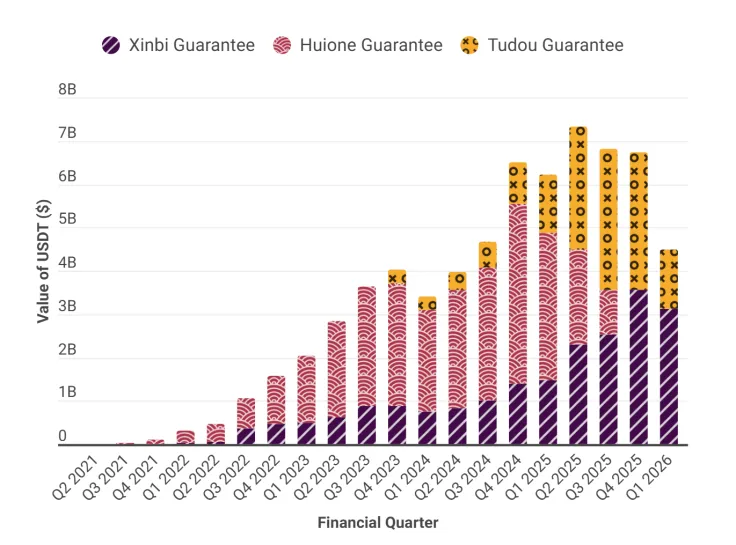
According to Elliptic, the messaging app Telegram, along with the USDT stablecoin issued by Tether, has formed a key infrastructure that underpins the modern global economy of online fraud. Experts predict that by 2025, total losses from such schemes will reach $442 billion, indicating a rapid growth of this shadow industry.
This is reported by Finway
Growth of Fraud Schemes and the Role of Telegram and USDT
Tom Robinson, Chief Scientist at Elliptic, claims that such criminal schemes have gained particular popularity following the COVID-19 pandemic. According to him, criminal syndicates in Southeast Asia are massively repurposing empty hotels and resorts into centers for cyber fraud, where approximately 300,000 people are held under the threat of violence and torture, forcing them to carry out fraudulent operations.
“Elliptic also reported a humanitarian crisis related to such schemes. According to the company’s estimates, around 300,000 people are held in such centers against their will. They are forced to participate in fraudulent operations under the threat of violence and torture.”
Telegram platforms operating through a guarantee system allow thousands of sellers to offer a variety of tools for illegal activities: databases, SIM cards, fake investment sites, money laundering services, and more. All financial transactions typically occur in USDT on the TRON network, which helps bypass traditional banking mechanisms for money laundering control.
Main Illegal Platforms and the Scale of Operations
Among the key platforms, Elliptic highlights the Huione Guarantee platform (later renamed Haowang Guarantee), which has facilitated transactions totaling at least $31 billion since 2021. This makes it the largest online marketplace for illegal payments in history. In comparison, the transaction volumes of well-known darknet platforms Silk Road and Alphabay were $216 million and $1 billion, respectively.
The Huione Pay service associated with this platform processed transactions worth over $103 billion solely in USDT. Following sanctions and pressure from law enforcement, some of these platforms were shut down, but they are quickly replaced by new services, such as Xinbi Guarantee, against which British authorities imposed sanctions in March this year due to ties to fraudulent centers and human rights violations.
The operation of such platforms is based on a mediation model: they hold guarantee deposits to resolve disputes between sellers and customers, which increases the level of trust in illegal operations.
Elliptic analysts emphasize that the infrastructure initially created for fraudulent operations is gradually becoming an element of the global financial crime system. It is used for laundering money related to North Korean hacking attacks, evading sanctions, and other transnational crimes.
Elliptic specialists stress that fighting individual platforms will not solve the problem systematically. They urge international regulators to increase pressure on technology platforms like Telegram, as well as on stablecoin issuers, including Tether. Experts recommend that Telegram actively block fraudulent platforms and that Tether freeze cryptocurrency wallets linked to illegal activities.
According to Elliptic, such platforms have already become an integral part of networks for money laundering, highlighting the need for enhanced international cooperation to combat next-generation financial crimes.

