

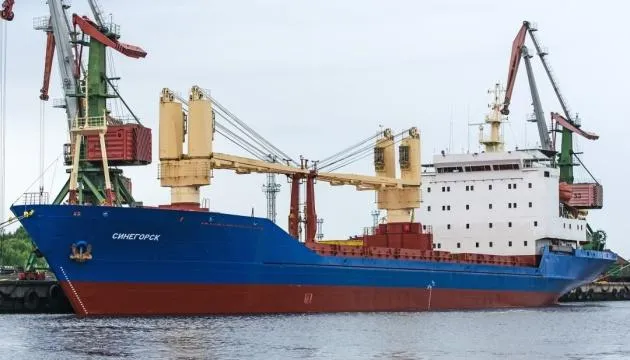
The Royal Navy of the United Kingdom conducted a strict surveillance operation on the Russian cargo ship “Sinegorsk,” which anchored for 14 hours above crucial undersea data transmission cables in the Bristol Channel. Following this, British military forces compelled the vessel to leave the country’s territorial waters.
This is reported by Finway
Russian Vessel Near Strategic Infrastructure
According to information from the MarineTraffic service, on Tuesday evening, “Sinegorsk” entered the Bristol Channel and stopped approximately two nautical miles from Minehead around 11:00 PM local time. The vessel remained stationary for 14 hours, indicating it was anchored. In close proximity to the vessel’s location, five undersea data transmission cables run, including two cables from the TGN Atlantic system, which connect Britain to New York, EXA Express, which links the country to Nova Scotia, as well as cables from the VSNL Western Europe network, which provide communication with Spain and Portugal.
“The movements of this Russian vessel appear extremely suspicious—it was positioned directly above our transatlantic deep-sea data transmission cables. This is yet another reminder of the constant and dangerous threats our country faces from Putin and his allies,” said Alicia Kearns, the shadow minister for security in Britain.
Actions of British Military and Reactions
The last entry of “Sinegorsk” into port was three weeks ago, when the vessel arrived in Arkhangelsk, a major trading port and the headquarters of the Northern Fleet of the Russian Federation. The reasons for the prolonged anchorage of the vessel near Minehead remain unknown. Sources in the British Ministry of Defence suggest that the Russian vessel may have entered the channel to wait out bad weather. A Coast Guard patrol aircraft, G-HMGC, was dispatched to the scene, monitoring “Sinegorsk” for 30 minutes before being replaced by a Royal Navy Wildcat helicopter. Before 2:00 PM, the vessel was recorded leaving British waters heading west. Official comments from the UK government and the coast guard are currently unavailable.
This is not the first instance of suspicious activities by Russian vessels near strategic infrastructure. In December, Finnish authorities arrested the crew of the Russian tanker Fitburg following an incident involving damage to undersea cables between Helsinki and Tallinn while the vessel passed over them.
The United Kingdom has already announced the implementation of artificial intelligence to “track and deter” Russian submarines as part of a new multimillion-pound project called “Atlantic Bastion.” The initiative aims to protect the country’s undersea cables and pipelines from potential threats.