

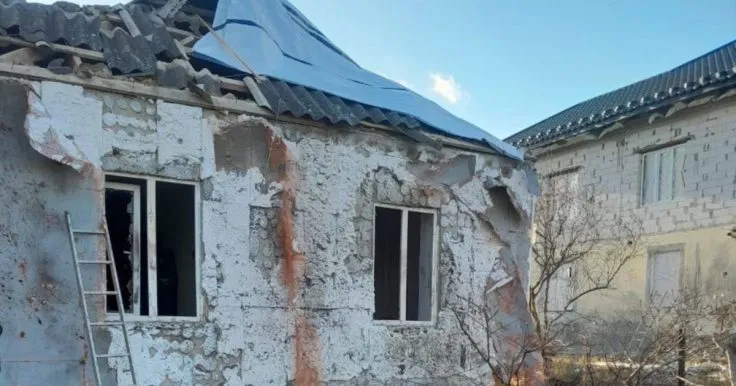
In the Kherson region, a resident of the village of Komyshany died as a result of a Russian strike. This was reported by the head of the regional military administration, Oleksandr Prokudin. According to him, the woman sustained serious injuries during the morning attack by a Russian drone and, despite the doctors’ efforts, she could not be saved.
This is reported by Finway
“Medics fought desperately for the life of the 62-year-old woman, but the injuries turned out to be fatal,” Prokudin commented.
The number of casualties from Russian attacks in Kherson region is rising
Earlier, the Kherson regional prosecutor’s office reported that three more residents of Kherson and a resident of Komyshany were injured as a result of Russian shelling that continued throughout the day. Russian troops regularly use various types of weapons – strike drones, missiles, guided bombs, and multiple launch rocket systems – to attack Ukrainian cities and civilian infrastructure.
International qualification of Russia’s actions: signs of genocide
Ukrainian authorities and international organizations regard such strikes as war crimes committed by the Russian Federation and emphasize their targeted nature. Systematic attacks on critical infrastructure, hospitals, energy facilities, as well as depriving the population of electricity, heat, water supply, communication, and medical assistance are considered signs of genocidal actions.
It is known that during the large-scale war, Russia commits various crimes that may fall under the definition of genocide. In particular, these include public calls for the destruction of Ukrainians, persecution of pro-Ukrainian populations in occupied territories, killings of intellectuals, deportation of children, and the destruction of Ukrainian cultural heritage.
The Convention on the Prevention and Punishment of the Crime of Genocide, adopted by the UN General Assembly in 1948, obliges the participating countries, of which there are currently 149, to prevent acts of genocide and to punish them both in wartime and in peacetime. According to this convention, genocide is recognized as actions intended to completely or partially destroy a national, ethnic, racial, or religious group.
Signs of genocide include: killing members of the group, causing them serious bodily harm, creating living conditions aimed at destruction, preventing births within the group, forcibly transferring children to another group, and publicly inciting such actions.
The leadership of Russia denies that during the full-scale war, its troops deliberately attack the civilian infrastructure of Ukrainian cities and villages, harming the peaceful population and destroying hospitals, schools, kindergartens, as well as energy and water supply facilities.