

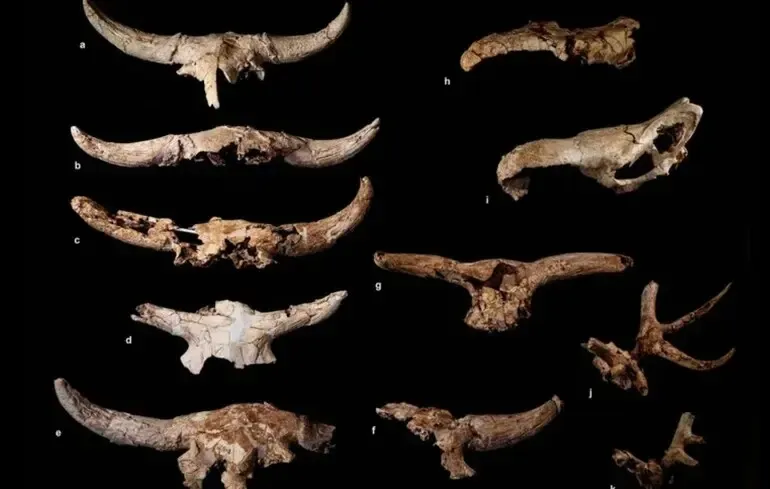
Scientists have discovered that Neanderthals brought and left the skulls of horned animals in the De-Cubierta cave, located in central modern-day Spain, for hundreds of years. This finding indicates the presence of complex cultural traditions among Neanderthals more than 43,000 years ago.
This is reported by Finway
Unique Discoveries in the De-Cubierta Cave
The De-Cubierta cave was explored by archaeologists back in 2009, and in 2023, 35 skulls of large mammals were found here, mostly without jaws. All of them belonged to horned animals, including steppe bison and aurochs. In addition, researchers uncovered over 1,400 stone tools made in the Mousterian style, which is characteristic of Neanderthals.
“At first glance, the deposits appear chaotic. What initially looked like an unorganized accumulation of materials turned out to be a clear record of both geological processes and human activity,” said lead author of the study, Lucía Villaseca Fernández, a PhD student in archaeology at the University of Alcalá in Spain.
Neanderthal Cultural Practices
According to scientists, many rockfalls occurred in the cave over the millennia; however, these events did not affect the intentional placement of the skulls. Researchers mapped the locations of all artifacts and compared them to debris from rockfalls, leading to the conclusion that the bones were deliberately brought and placed in specific parts of the cave.
Experts emphasize that this tradition persisted during periods of significant cooling from 135,000 to 43,000 years ago. It turned out that the skulls were brought to different parts of the cave over an extended period, indicating a deeply rooted practice not related to survival or economic necessity.
The reasons for this custom remain unknown. However, the selection, processing, and placement of horned animal skulls in a cave where these animals did not inhabit “highlight their capacity for cultural practices that are not directly linked to survival.”