

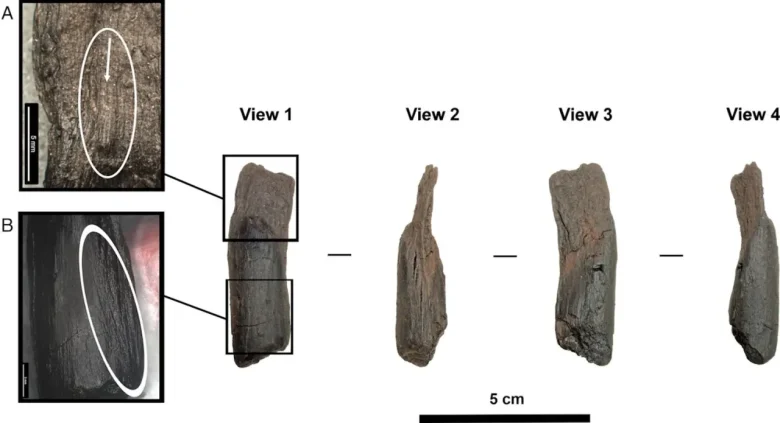
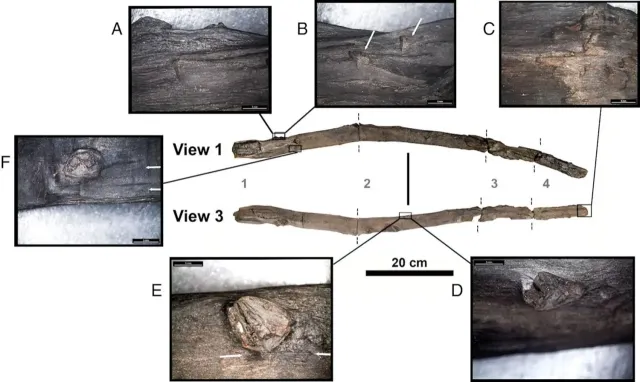
Archaeologists in Greece have made an extraordinarily important discovery, uncovering two wooden tools that are approximately 430,000 years old, making them the oldest of their kind in the world. This could significantly change our understanding of the technological level of ancient humans in Europe.
This is reported by Finway
Features of the Discovery Site and Preservation Conditions
The artifacts were found at a site of ancient hominids near a lake, which researchers believe served as a natural shelter during cold periods. The moist soil in this area created unique conditions for the preservation of wood for hundreds of thousands of years, which is a great rarity in paleoarchaeology.
Description and Significance of the Artifacts
The first item discovered is a processed fragment of an alder trunk, which was likely used as a digging stick. The second tool, made from poplar or willow wood, is smaller in size but also indicates purposeful use due to signs of wear.
Alongside the wooden tools, other evidence of economic activity was found: stone tools, animal bones with signs of processing, as well as remains of a forest-dwelling straight-tusked elephant. The combination of these materials attests to the complex nature of the activities of the ancient inhabitants of the region.
Scientists note that such findings confirm that hominids, which include humans, chimpanzees, gorillas, and orangutans, already possessed skills in making various types of tools, were able to process their prey, and adapted to living alongside large predators.
This discovery highlights the important role of wooden tools in the technological development of our human ancestors, as their use contributed to survival and adaptation in an environment rich in predators. Despite the fact that wood rarely survives to this day, these artifacts prove that the technological progress of hominids was more advanced than previously thought.