

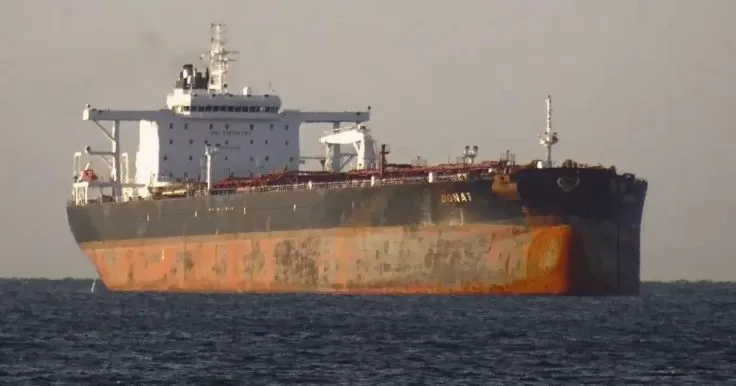
About half of the tankers that make up the so-called ‘shadow fleet’ of the Russian Federation are in a critically dangerous state and pose a threat of a large-scale ecological disaster for the entire world.
This is reported by Finway
Wear and corrosion of the ‘shadow fleet’ vessels
According to experts, the ‘shadow fleet’ currently consists of approximately 1800 vessels, of which up to 1500 are oil or product tankers. A significant portion of these vessels has been in operation for over twenty years — this age is typically the limit after which cargo ships are subject to disposal. Due to many years of exposure to seawater, the hulls of the tankers suffer from serious corrosion, and their technical systems fail, increasing the risks of accidents and pollution.
Anil Sharma, head of the world’s largest ship recycling company, emphasized that a significant portion of the ‘shadow fleet’ needs to be decommissioned as soon as possible:
“At least a third should be recycled, possibly more. I would honestly consider it to be more than half,” said Sharma.
Analysis shows that operating old vessels that do not undergo proper maintenance creates serious risks for the environment. Many of them lack insurance coverage, and crews often do not have sufficient qualifications. According to Alexander Saverys, CEO of one of the leading shipping companies, these tankers represent a “ticking time bomb,” and it is a miracle that large-scale accidents have not yet occurred.
Sanctions, the closed Strait of Hormuz, and new challenges
Sanction pressure has complicated access for ship owners to legal disposal procedures. Instead of being decommissioned, vessels are kept afloat, continuing to be operated in profitable trading schemes made possible by the sharp rise in oil prices due to the crisis in the Persian Gulf. As a result, most old vessels remain in operation despite obvious technical problems.
Journalists note that the closure of the Strait of Hormuz has slowed the pace of tanker recycling. Countries in the region are using almost all available vessels for oil storage, leaving dozens of tankers in the Persian Gulf that should have been decommissioned long ago. Anil Sharma predicts that after the strait reopens, the demand for ship recycling will sharply increase, as these vessels will finally be able to unload their cargoes and be taken out of service.
Despite the absence of large-scale disasters, isolated cases of oil spills and emergencies involving ‘shadow fleet’ vessels have already been recorded. This trend is causing increasing concern among experts and ecologists, who emphasize the urgent need to address this issue.