

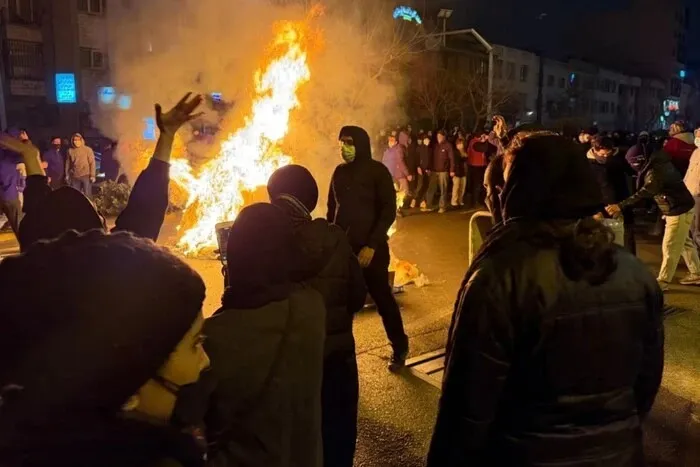
In Iran, a large-scale campaign of arrests continues as a result of the brutal suppression of anti-government protests that took place last month. Security forces are conducting searches in homes and workplaces across the country, detaining individuals from various professions and social groups — from students, doctors, and teachers to well-known actors, athletes, and political reformers.
This is reported by Finway
Mass Arrests and New Surveillance Technologies
According to human rights activists, the number of detainees may exceed 50,000, but it is difficult to establish exact figures due to the government’s strict internet blackout. Activists report the active use of street surveillance cameras and drones to identify protest participants. Many detainees are held in isolation for weeks, deprived of contact with relatives and lawyers, and then transferred to prisons with extremely poor conditions, including the women’s prison in Qarchak, which is notoriously known for its sanitary conditions. Among those arrested are dozens of children and hundreds of students.
“Lawyers note that this time the authorities have completely abandoned even the semblance of adhering to legal procedures, blocking the bank accounts and SIM cards of the relatives of the suspects.”
Civil Disobedience and International Reaction
Despite the widespread violence, which has reportedly resulted in the deaths of between 3,000 and 7,000 people, protests and acts of civil disobedience continue. Professional unions of doctors, teachers, and writers are making public statements, urging the relatives of the detained not to remain silent about the missing and demanding an end to the repression. The growing public discontent is further exacerbated by a deep economic crisis: the national currency is rapidly depreciating, inflation is reaching record levels, and the government is forced to implement a rationing system for food distribution.
The situation is also complicated on the international stage: U.S. President Donald Trump responded to the events in Iran by sending aircraft carriers to the Persian Gulf and threatening to carry out strikes in the event of further mass executions or the start of executions of protesters. Despite official statements from the Iranian authorities about controlling the situation and organizing mass pro-government rallies, experts assert that the excessive brutality of the security forces indicates the regime’s deep fear of the possibility of losing power.