

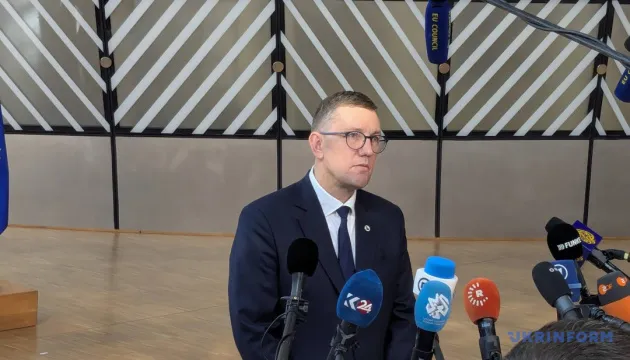
Estonian Prime Minister Kristen Mihal has called on the European Union to impose additional tariffs on goods from Russia to secure funding for the reconstruction of Ukraine. According to Mihal, the costs of restoring Ukrainian infrastructure and cities destroyed by Russian bombings amount to hundreds of billions of euros.
This is reported by Finway
Calls for additional tariffs and funding for reconstruction
Despite the sanctions imposed, the ban on the import of many Russian goods, and the establishment of tariffs on Russian grain and fertilizers, the EU has still not raised tariffs on permitted Russian goods specifically to aid Ukraine. The Estonian Prime Minister believes that such customs duties should become a source of funds for reconstruction.
“We need to impose tariffs on goods from Russia to cover the damages. This has been discussed in various corridors and at different meetings, that various types of tariffs on Russian goods could finance the reconstruction of Ukraine,” said Mihal.
In November last year, seven countries, including Estonia, initiated the introduction of tariffs on Russian steel, fertilizers, and other goods. However, this proposal was not included in the twentieth package of sanctions agreed upon by the EU this week.
Scale of destruction and financial needs
Kristen Mihal noted that even the 210 billion euros of frozen assets of Moscow currently held in a financial depository in Brussels would not be enough to cover all the costs of Ukraine’s reconstruction. According to a study conducted for the government of Ukraine, the UN, the European Commission, and the World Bank and published in February last year, about 500 billion euros will be needed for the country’s reconstruction over the next ten years. The same report indicates that 13% of Ukraine’s housing stock has been destroyed in three years of war.
Mihal emphasized that Russia must bear the responsibility for the destruction; otherwise, similar actions could be repeated in the future. He stressed that Estonia has a long history of relations with Russia and understands its threats well, as the country gained independence relatively recently.
Furthermore, the Estonian Prime Minister positively assesses the idea of accelerating Ukraine’s accession to the EU, but emphasizes the necessity of meeting the required criteria and implementing reforms by the candidate country.