

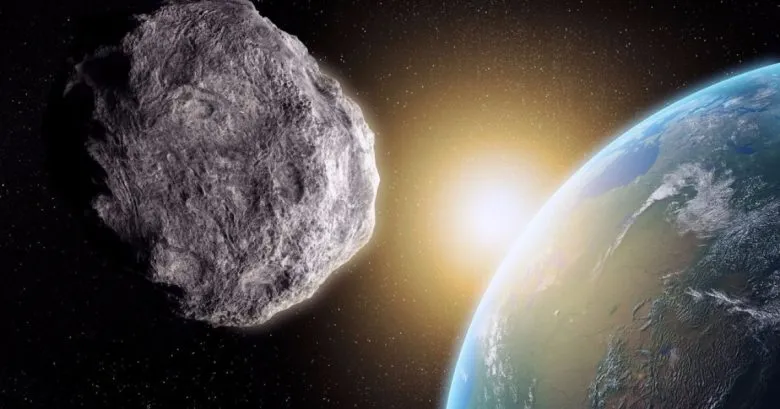
An asteroid named “2026 CC,” with a diameter of about 30 meters, is approaching Earth. According to astronomers’ calculations, this celestial object will pass at a distance slightly greater than that to the Moon.
This is reported by Finway
Characteristics of the Asteroid and Flight Trajectory
“2026 CC” is traveling through space at a speed of nearly 22,000 miles per hour, which is approximately 35,400 km/h. The closest the asteroid will come to our planet is on February 7, 2026, when it will fly by at a distance of about 379,000 miles (or 610,000 km) from Earth. For comparison, the average distance to the Moon is about 239,000 miles (384,000 km).
Does the Asteroid Pose a Threat to Earth?
Astronomers emphasize that none of these objects pose a threat to the planet in the near future.
Asteroids are small rocky bodies that have remained since the formation of the Solar System about 4.6 billion years ago. Most of them are located in the main belt between Mars and Jupiter; however, some asteroids, known as Near-Earth Objects (NEOs), cross the orbits of other planets and can approach Earth closely enough.
According to NASA’s classification, potentially hazardous asteroids (PHAs) are those that can come within 4.6 million miles of Earth. However, experts stress that current trajectories of such objects do not indicate any danger to our planet in the coming years or decades.
Director of the Center for Near-Earth Object Studies (CNEOS) Paul Chodas explains that the term “potentially hazardous” only indicates a theoretical possibility of an asteroid’s orbit changing in the distant future, which could lead to a risk of collision with Earth. However, current assessments confirm the absence of any threat in the short term.
NASA specialists emphasize that most Near-Earth Objects have orbits that pose no danger. Nevertheless, scientists continue to monitor potentially hazardous asteroids closely to accurately and timely assess possible risks to the planet.