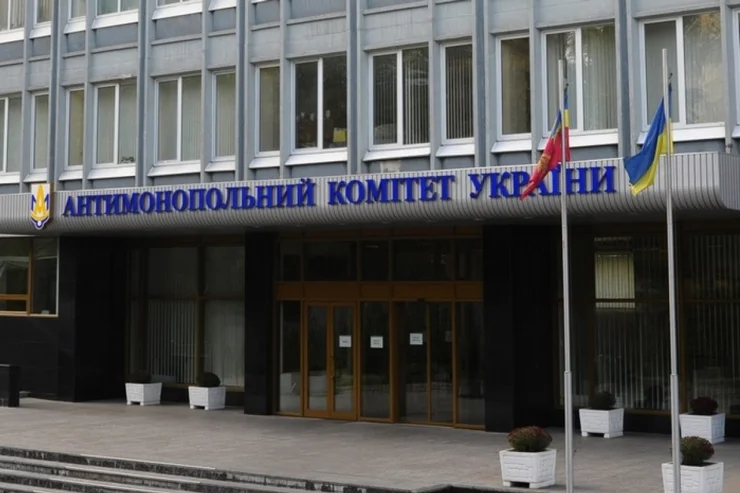
The Antimonopoly Committee of Ukraine has obliged the largest networks of gas stations to provide an economic justification for current fuel prices within ten days. If this requirement is not met, the regulator promises to increase pressure, but experts are not confident that this will lead to a decrease in gasoline and diesel prices in the near future.
This is reported by Finway
Reasons for high prices and the position of the AMC
The agency explains that the rise in fuel prices in Ukraine was caused by several factors: the increase in global oil prices, the rise in quotations for petroleum products in the EU, difficulties in ensuring the import of diesel fuel, fluctuations in exchange rates, and increased logistics costs. However, the market situation has not remained stable — in March and the first half of April 2026, global oil and petroleum product prices fluctuated, and in some cases even decreased, but Ukrainian consumers did not feel this.
The AMC points out that the Ukrainian retail market for petroleum products is competitive, and therefore operators must consider not only the increase in purchase prices but also decreases, adjusting retail prices according to the market situation. This is important also because the price of fuel affects the cost of goods and services in other sectors. For this purpose, the committee recommended that the largest networks form prices for gasoline, diesel, and liquefied gas based on objective economic factors and market fluctuations, strictly adhering to the legislation on the protection of economic competition.
“The Antimonopoly Committee of Ukraine recommended that the largest gas station operators ensure the formation and change of retail prices for gasoline, diesel fuel, and liquefied gas based on objective economic factors.”
Should we expect a decrease in prices: expert opinions
Economist Hennadiy Ryabtsev notes that the current recommendation of the AMC is not mandatory for execution, as this is only the beginning of an investigation, not its conclusion. According to him, if violations of competition legislation are found during the investigation, then mandatory prescriptions for price changes and fines for incomplete information provision may follow. However, as a rule, market operators take possible risks into account in their pricing policies and embed them in fuel costs, shifting the responsibility for these risks onto the end consumer.
Ryabtsev emphasizes that operators often raise fuel prices even before the actual increase in the cost of petroleum products at the border, justifying this with potential risks. As a result, the end consumer pays for risks that often do not materialize, and the excess profit from each liter of gasoline or diesel can amount to 8–12 hryvnias.
At the same time, the expert does not predict a noticeable decrease in prices at gas stations within the 10-day period allotted by the AMC. In his opinion, the excessive rise in fuel costs does not correspond to trends in European markets, but significant changes in pricing are unlikely to occur in the near future.
The General Director of the All-Ukrainian Association of Automotive Importers and Dealers, Oleg Nazarenko, believes that the AMC’s recommendations will not have a significant impact on the situation, as fuel prices among different operators are practically the same, which may indicate the existence of collusion. He emphasizes that a thorough investigation of gas station pricing policies should be conducted by law enforcement agencies, which can obtain the necessary data on fuel purchase prices abroad and compare them with retail prices in Ukraine. According to Nazarenko, only the presence of evidence of unjustified price increases can serve as a basis for reducing fuel costs, but this requires appropriate initiative from the government.
President of Ukraine Volodymyr Zelensky previously reported that the state has already reached agreements with several countries in the Middle East regarding the formation of annual fuel reserves, which should ensure supply stability.