

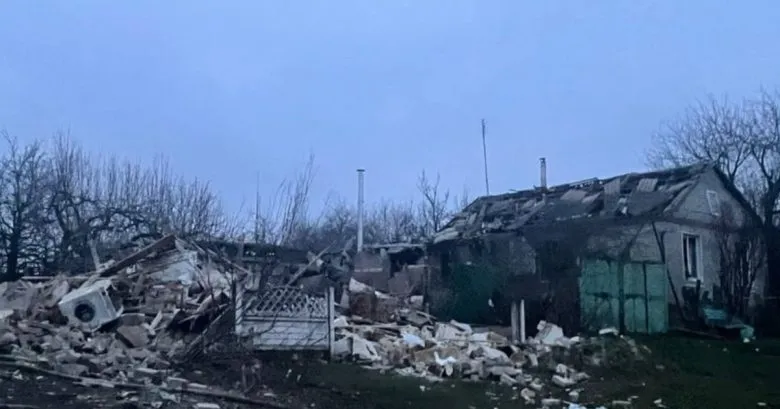
As a result of yet another attack by the Russian army on civilian objects in the Kharkiv region, two local residents were injured. According to the head of the Derhachi City Military Administration, Vyacheslav Zadorenko, on March 17, Russian military forces shelled a store in Slatyne, Kharkiv region.
This is reported by Finway
Details of the Incident in Slatyne
As a result of the shelling, two 41-year-old residents sustained shrapnel injuries. One of the injured was hospitalized by emergency medical services, while the other refused hospitalization on his own. Zadorenko reported that the hospitalized man is a municipal driver who had previously survived an attack by a Russian FPV drone on a municipal garbage truck in Ruska Lozova on January 23 of this year.
“The hospitalized man is our municipal driver who survived during the attack by a Russian FPV drone on a municipal garbage truck in Ruska Lozova on January 23. Thanks to the favor of fate, his life is not in danger, so let us wish him a speedy recovery.”
Attacks on Civil Infrastructure and International Qualification
Russian troops systematically strike Ukrainian cities and civil infrastructure using various types of weaponry: strike drones, missiles, guided bombs, and multiple launch rocket systems. The Ukrainian authorities, together with international organizations, qualify such attacks as war crimes of the Russian Federation and emphasize their targeted nature.
In particular, shelling of vital infrastructure for the population, healthcare facilities, as well as depriving people of electricity, heat, water, communication, and medical assistance exhibit signs of genocidal actions. Human rights defenders emphasize that during the full-scale war, Russia systematically commits crimes that may fall under the definition of genocide, including:
- Declarations of intent to destroy Ukrainians;
- Public calls for the destruction of Ukrainians;
- Targeted shelling of vital infrastructure and medical facilities;
- Persecution of individuals with pro-Ukrainian positions in occupied territories;
- Destruction of Ukrainian intelligentsia and culture;
- Changing the identity of children through the education system and deportations;
- Seizure of Ukrainian books, looting of museums, and theft of historical artifacts.
According to the Convention on the Prevention and Punishment of the Crime of Genocide, adopted by the UN General Assembly in 1948, participating countries must prevent acts of genocide and punish them at all times. Genocide is defined as actions aimed at the total or partial destruction of a national, ethnic, racial, or religious group, and its characteristics include killings, causing serious bodily harm, creating conditions for the destruction of the group, forcibly preventing childbirth, and the forced transfer of children.
The leadership of Russia denies any involvement of its army in targeted strikes on the civil infrastructure of Ukrainian cities and villages, as well as in the deaths of civilians and the destruction of hospitals, schools, kindergartens, and energy and water supply facilities.