

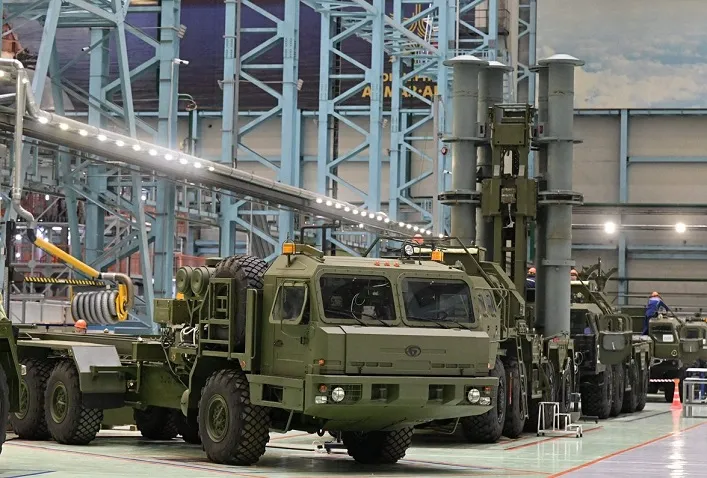
According to an analysis of Rosstat data, this year, a 66% increase in Russia’s gross domestic product is driven by the military-industrial complex (MIC), which continuously produces tanks and bombs for the war against Ukraine. Of the 0.6% economic growth in the third quarter of 2025, 0.4 percentage points belong to the sector of “public administration and security organizations”.
This is reported by Finway
Increased Defense Spending and Arms Production
The share of the MIC in the structure of Russia’s GDP continues to grow rapidly — it has nearly tripled over the year. At the end of last year, this sector accounted for only 1 percentage point of the total 4.3% economic growth. Since 2022, the Russian budget has spent a total of 42 trillion rubles on the army, arms procurement, and support for law enforcement agencies, which is equivalent to approximately 542 billion US dollars.
Ramp-Up of Ammunition Production and Economic Consequences
According to NATO intelligence estimates, the production of artillery shells in Russia over the past year has exceeded 4.5 million units, which is 11 times more than before. In bomb production, Russia, according to the head of Rostec, “has outpaced all countries in the world”.
Scientists from the Carnegie Russia Eurasia Center note that the bloated military-industrial complex is turning Russia into a “disposable goods economy,” as everything produced is immediately destroyed on the battlefield. Trillion-dollar investments in the MIC do not create any long-term assets, such as highways, power plants, or schools. As a result, the Russian economy is becoming increasingly burdened but also poorer with each year of war.
Thus, despite the formal growth of GDP, Russia’s current economic model is increasingly oriented towards military needs, making it impossible to create a sustainable economic base for the development of other sectors and improving the welfare of the population.