

Law enforcement agencies have recorded over 11,000 drone attacks of small radius conducted by Russia since the beginning of the full-scale war. According to the Office of the Prosecutor General, drones, including FPV drones, are increasingly used as tools of terror against the civilian population, rather than just as means of conducting combat operations.
This is reported by Finway
Systematic practice of attacks on civilians and emergency services
It is noted that Russian troops use drones to strike residential areas, civilian vehicles, critical infrastructure facilities, hospitals, places of mass gatherings, as well as on emergency service workers during the aftermath of attacks. Such actions are classified as gross violations of international humanitarian law and are considered war crimes.
The number of criminal proceedings regarding drone attacks is constantly increasing: if in 2024 there were 2,427 such cases recorded, in 2025 this figure reached 6,771. In the first four months of 2026, 2,010 corresponding proceedings have already been registered.
“Unmanned aerial vehicles, including FPV drones, are increasingly used by Russia not as a means of combat but as a tool of targeted terror against the civilian population,” the agency states.
The Office of the Prosecutor General points to the systematic nature of the attacks: repeated drone strikes are recorded after the arrival of rescuers, medics, and police at the attack sites, as well as targeted attacks on people in open spaces, near residential buildings, public transport stops, and on civilian transport.
The threat of double strikes and the scale of destruction
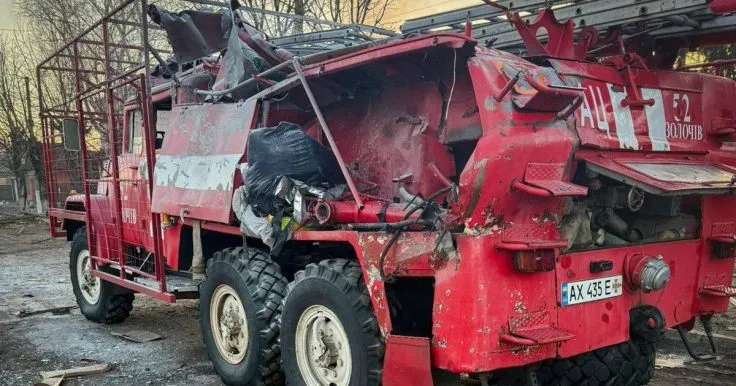
Particular danger is posed by so-called “double” strikes, when the Russian army attacks after the arrival of rescuers and medics. Currently, 34 criminal proceedings have been opened regarding attacks on emergency service workers while performing their official duties: 9 of them concern State Emergency Service employees, and 25 involve medical workers. As a result of these double strikes, 52 medics were injured, three of whom died, as well as 20 rescuers.
There are also 95 criminal proceedings being investigated regarding drone attacks on National Police employees, resulting in 167 police officers being injured, four of whom died. The attacks occurred during the evacuation of the population, response to shelling, service duty, and movement through populated areas.
As a result of the attacks, 52 units of specialized transport were damaged, including 44 emergency medical service vehicles and 8 fire and rescue vehicles.
The Office of the Prosecutor General emphasizes the increase in the intensity of attacks: while at the beginning of the war isolated cases of drone use were recorded, in 2024–2026 they became mass occurrences – up to 45–50 criminal proceedings per day during certain periods.
The nature of the attacks is also changing: the Russian army is using FPV drones and unmanned aerial vehicles with remote ammunition drop systems more widely. A particular threat is posed by fiber-optic drones, which are more difficult to detect and neutralize with electronic warfare means.
The most tense situation is observed in the liberated part of the Kherson region, where 5,303 criminal proceedings regarding drone attacks on civilian infrastructure have been registered. As a result, 287 civilians have died, including children. Another 2,549 people have been injured, including 41 children.
Russian military forces use various types of weapons to attack Ukrainian cities and civilian infrastructure – strike drones, missiles, guided aerial bombs, and multiple launch rocket systems. Such actions are classified by the Ukrainian authorities and international organizations as war crimes of the Russian Federation.
Shelling of life support systems and healthcare facilities aimed at depriving people of electricity, heat, water, communication, and medical assistance has signs of genocidal actions. Human rights defenders and experts emphasize that Russia commits all types of crimes that fall under the definition of genocide: from public calls for the destruction of Ukrainians as a nation to the targeted destruction of the intelligentsia, deportation of children, and destruction of Ukrainian cultural heritage.
The UN Convention on the Prevention of the Crime of Genocide defines genocide as actions carried out with the intent to destroy, in whole or in part, a national, ethnic, racial, or religious group as such. Participating countries are obliged to prevent genocide and punish it in wartime and peacetime.
At the same time, the leadership of Russia denies that the Russian army deliberately strikes civilian infrastructure, killing civilians and destroying hospitals, schools, and energy facilities throughout Ukraine.