

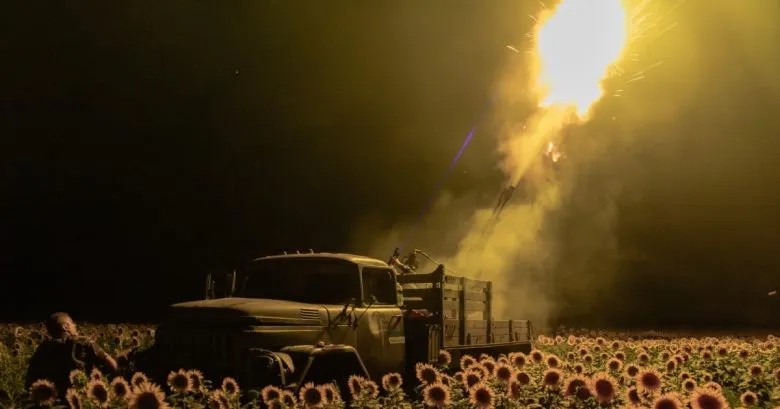
On the night of March 28, Russian forces launched a large-scale attack on Ukraine, deploying 273 drones. The primary focus of the strike was on the Odesa region, marking the most intense drone attack in recent times.
This is reported by Finway
Scale of the Attack and Consequences for Odesa
According to the Air Force Command, the drones were launched from the territories of the Oryol and Kursk regions, Millerovo, Primorsko-Akhtarsk, as well as from the occupied Hvardiyske in Crimea. As of 07:30, Ukrainian air defense forces managed to shoot down or suppress 252 enemy drones. However, there were 21 hits from strike drones at 18 different locations, and debris from the downed drones fell on an additional 9 sites.
“According to preliminary data, as of 07:30, air defense has shot down/suppressed 252 enemy UAVs. There were 21 hits from strike UAVs at 18 locations, and debris from downed drones fell at 9 locations.”
After 7 AM, the Russian army continued to carry out repeated drone strikes on Odesa, as well as on regions in the north and east of the country. The exact results of these attacks are still being clarified.
It is known that two people were killed and another 12 were injured as a result of the nighttime attack on Odesa. Civil infrastructure facilities were also damaged.
Targeted Strikes on Civilian Objects and International Assessment
The Russian Federation regularly employs various types of weaponry – strike drones, missiles, aerial bombs, and multiple launch rocket systems – to shell cities and critical infrastructure across Ukraine. Ukrainian officials and international organizations classify such actions as war crimes, emphasizing their targeted nature.
In particular, attacks on vital infrastructure systems, medical facilities, and energy objects that lead to power, heating, water, and communication outages, as well as complicating access to medical assistance, exhibit characteristics of genocidal actions. Human rights defenders, lawyers, and genocide researchers indicate that during this large-scale aggression, Russia is committing all types of crimes that can be classified as genocide against the citizens of Ukraine.
- Declarations of intent to destroy Ukrainians, including public statements by Russian politicians claiming that Ukrainians as a nation do not exist and that the country should not exist in the future.
- Systematic shelling of critical infrastructure and medical facilities aimed at disrupting basic living conditions.
- Persecution and extermination of individuals with pro-Ukrainian positions in occupied territories.
- Destruction of the intelligentsia, teachers, cultural figures, as well as the introduction of educational programs in occupied territories aimed at changing children’s identities.
- Deportation of unaccompanied children to Russia for the purpose of assimilation.
- Destruction of Ukrainian books, looting of museums, and theft of historical artifacts.
According to the United Nations Convention on the Prevention and Punishment of the Crime of Genocide (adopted in 1948), such actions are considered crimes against humanity. To date, 149 countries have ratified this convention and are obligated to prevent and punish acts of genocide both in peacetime and during war.
Under international law, genocide is defined as actions aimed at the complete or partial destruction of a national, ethnic, racial, or religious group. Indicators of genocide include intentional killings, causing serious bodily harm, creating conditions calculated for the physical destruction of a group, obstructing childbirth, forcibly transferring children from one group to another, and publicly inciting such actions.
Despite numerous facts of attacks on civilian objects, the Russian leadership denies the targeting of strikes against the peaceful population of Ukraine, hospitals, schools, kindergartens, energy, and water supply facilities.