

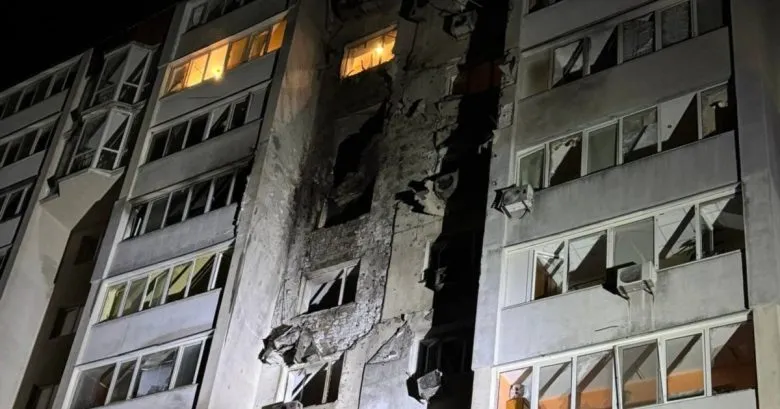
On the night of March 28, Odessa was subjected to yet another large-scale attack by the Russian Federation, resulting in the death toll rising to two people. According to Oleg Kiper, the head of the Odessa Regional Military Administration, rescuers found the body of a 34-year-old man while clearing the rubble of a five-story residential building. In total, two people died as a result of the shelling, and another 12 were injured, including a child. Search and rescue operations at the site of the tragedy are ongoing.
This is reported by Finway
Damage to infrastructure and government response
Minister of Community and Territorial Development Oleksiy Kubер reported that Russia’s strikes targeted a maternity hospital, residential areas, and port infrastructure. In particular, a drone damaged a grain gallery at one of the ports. All emergency and utility services are working at the scene to mitigate the consequences of the attack and assist the victims.
“The enemy cynically struck at the maternity hospital, residential areas, and port infrastructure. A drone strike damaged a grain gallery at one of the ports. All emergency and utility services are on site.”
Scale of the shelling and international assessment
President Volodymyr Zelensky emphasized that this attack had no military objective and is a “pure act of terrorism against ordinary civilian life.” He stated that the Russian army launched more than 60 strike drones at the city. In addition to the Odessa region, shelling was also recorded in the Poltava and Dnipropetrovsk regions. Zelensky noted that such strikes indicate Russia’s unwillingness to end the war, making any easing of pressure on the aggressor unacceptable, and coordinated international support for the protection of civilians is crucial.
Russian troops continue to systematically attack cities and civilian infrastructure in Ukraine, using various types of weapons – strike drones, missiles, aerial bombs, and multiple rocket launch systems. The Ukrainian authorities and international human rights organizations classify such shelling as war crimes committed by the Russian Federation and note that these actions are deliberate.
Shelling of vital facilities and healthcare institutions aimed at depriving the population of electricity, heat, water, communication, and medical assistance is viewed as signs of genocidal actions.
According to the Convention on the Prevention and Punishment of the Crime of Genocide, adopted by the UN General Assembly in 1948, member states are obligated to prevent acts of genocide and punish them in peacetime and during war. The convention defines genocide as actions carried out with the intent to destroy, in whole or in part, a national, ethnic, racial, or religious group. Signs of genocide include killings, causing serious bodily harm, deliberately creating conditions for the destruction of a group, preventing births, and forcibly transferring children to another group, as well as public incitement to such actions.
The Russian leadership denies that the Russian army deliberately targets Ukraine’s civilian infrastructure and kills the civilian population, despite abundant evidence of the destruction of hospitals, schools, energy facilities, and other civilian targets.