

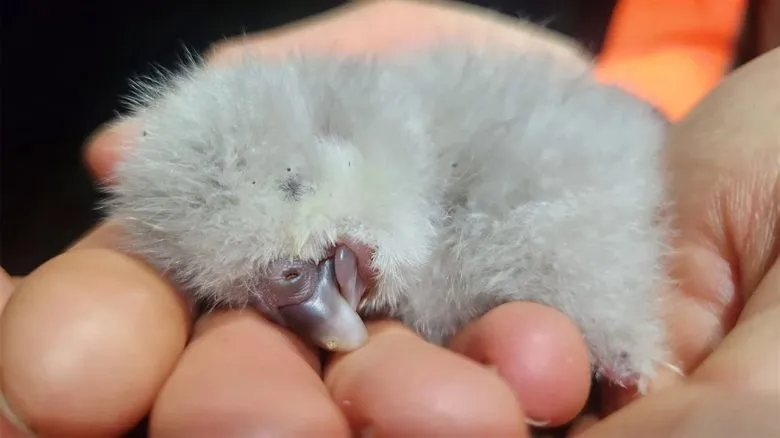
On February 14th, Valentine’s Day, a kakapo chick – one of the rarest flightless parrots on the planet – was born in New Zealand. The last addition to this population was recorded four years ago, making this event a true sensation for conservationists. If the chick survives and becomes independent, the total number of kakapos could increase to 237 individuals. It will be officially counted in the population in a year when it fully matures.
This is reported by Finway
The Most Successful Breeding Season
The current breeding season for kakapos is already being called the largest in the history of observations of the species Strigops habroptilus. Back in December, New Zealand announced the start of the season: females laid 187 eggs, but only 74 were found to be fertilized. Biologists note that even after hatching, the chicks have low chances of survival, as a significant portion does not reach adulthood.
To increase the chances of successful population growth, specialists use special methods, including “adoption.” Eggs are transferred to the nests of other females, as they tend to care best for only one or two chicks. This was the case this time as well – the biological mother of the newborn was a female named Tīviri, while the egg was incubated by kakapo Yasmin.
The Story of the Fight for Species Conservation
The kakapo is a symbol of extraordinary survival efforts. Due to hunting and the introduction of predators to the islands, the population of these parrots fell to a critical 51 individuals in 1995, leading to a loss of genetic diversity.
Today, kakapos live only on isolated islands where there are no large predators. Each breeding season is under close monitoring by biologists. Special attention is given to those individuals whose genes are least represented in the population to preserve and restore genetic diversity.
“The story of kakapo conservation is a story of survival. Due to hunting and introduced predators on the islands, their population fell to a critical 51 individuals in 1995. This led to a significant loss of genetic diversity.”
Experts hope that through targeted measures, these unique parrots will be able to breed in the future without constant human assistance, and the species’ numbers will continue to grow.