

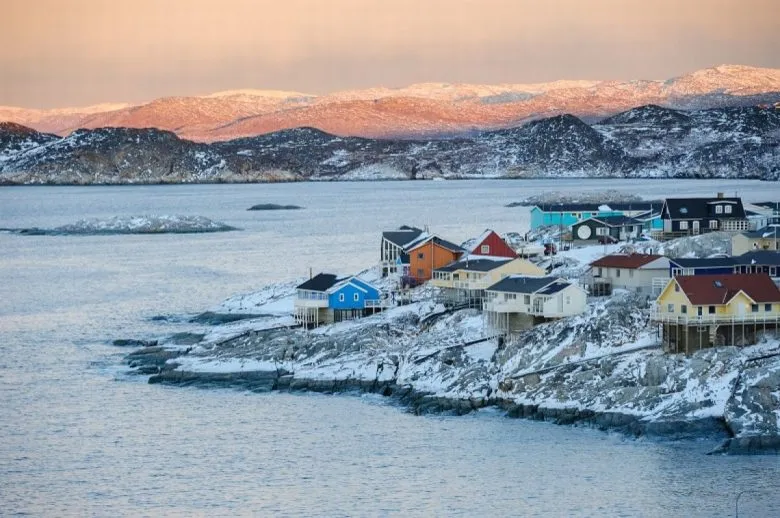
In Greenland, a record high temperature increase was recorded in January, significantly exceeding the climatic norm for this region. Particularly warm weather was observed on the western coast of the island, where the average monthly temperature in the capital Nuuk rose above zero for the first time, reaching +0.1°C.
This is reported by Finway
Record Temperatures in Various Cities of Greenland
According to the Danish Meteorological Institute, on the warmest day of January in Nuuk, the thermometer rose to 11.3°C. This figure exceeds the average climatic norm (1991–2020) by 7.8 degrees and sets a new record, surpassing the previous maximum that had stood since 1917 by 1.4 degrees. Similar warming was observed in other cities: in Ilulissat, the average temperature for January was -1.6°C, which is 11 degrees above the usual figure and 1.3 degrees higher than the record set in 1929. Local residents report that the unusually warm weather allowed them to go outside in unzipped jackets.
Climatologists explain such anomalies as a phenomenon of “exchange” of air masses between the Arctic and Europe, but emphasize that the frequency of records is a direct consequence of global warming. Researcher Martin Olesen notes that the Arctic is warming 3–4 times faster than the global average.
Possible Consequences and Ongoing Monitoring
Experts emphasize that such temperature anomalies are becoming increasingly common against the backdrop of global warming, especially in Arctic regions. The Danish Meteorological Institute continues to conduct thorough monitoring of weather conditions, as the current winter in Greenland may lead to the establishment of new historical temperature records.