

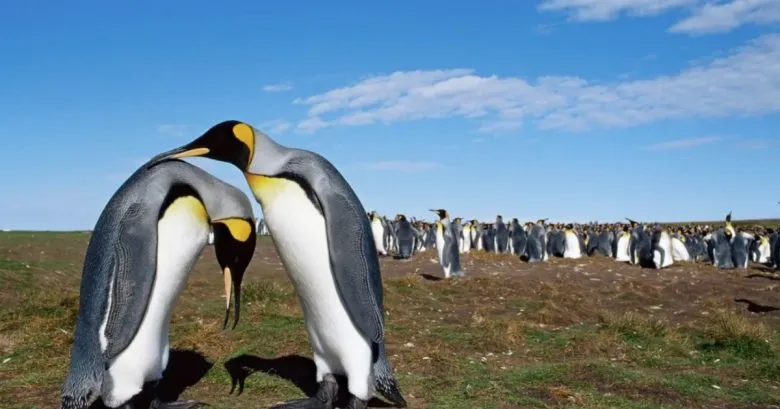
Researchers have observed a concerning trend: penguins living in zoos around the world exhibit significantly accelerated aging compared to their wild counterparts. Scientists believe that the carefree life in captivity, while protecting these seabirds from harsh weather and predators, comes at a cost to their biological age.
This is reported by Finway
Causes of Accelerated Aging in Zoo Penguins
A recent study by an international group of scientists has confirmed that penguins residing in zoos with unlimited access to food physically age more quickly. Blood analysis of 64 royal penguins, of which 34 were from the wild on Possession Island in the Southern Ocean, and another 30 from the Zurich Zoo and Loro Parque (Spain), revealed discrepancies between their chronological and biological ages. It turned out that 15-year-old penguins in zoos have a physiological condition akin to that of 20-year-old wild birds.
“15-year-old penguins in zoos actually have the body of a 20-year-old penguin in the wild.”
Despite the fact that the overall lifespan of penguins in captivity may be longer due to protection from external risks, overfeeding and lack of physical activity provoke changes in circadian rhythms, sleep, and cellular homeostasis. Such disruptions, according to scientists, significantly affect the aging processes. These characteristics are also typical of people who lead a sedentary lifestyle with excessive food consumption.
Study Features and Epigenetic Changes
In the study, an epigenetic clock was used to assess the biological age of the penguins. Wild birds, which can fast for up to eight weeks and travel hundreds of kilometers in search of food, demonstrate higher physical endurance and age more slowly. In contrast, zoo residents lack the need for active behavior, which, combined with the absence of stressors, altered microbial environments, and monotonous diets, affects the expression of genes related to metabolism, growth, cell death, heart health, and physical activity.
Scientists also compared these data with similar changes in humans. For contrast, they used data on the effects of smoking—one of the most powerful factors in accelerated aging in humans. The results confirmed the reliability of the chosen research model and allowed for parallels to be drawn between the behavior of penguins in zoos and the sedentary lifestyle of people.
Royal penguins remain exceptionally long-lived animals, capable of living up to 40 years; however, the conditions of captivity significantly impact their quality of life and aging rates. Researchers emphasize that these findings are important for studying the effects of lifestyle on the health of modern humans.