

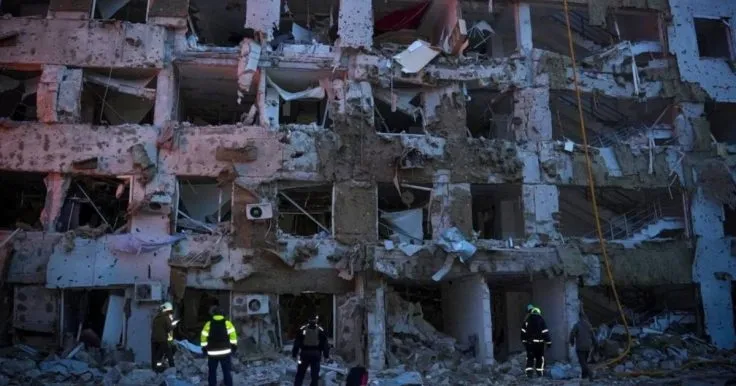
In the night leading to today, Russian troops launched a series of drone attacks on Mykolaiv, Odesa, and Kherson regions, resulting in casualties among the civilian population and damage to infrastructure facilities.
This is reported by Finway
Consequences of Shelling in Mykolaiv and Odesa
In Mykolaiv, a 65-year-old man was injured as a result of shelling and was hospitalized in serious condition. A private house in the city was damaged, and a warehouse in the Bashtanka district was affected.
“As a result of the attack in Mykolaiv, a 65-year-old man was injured. He was hospitalized. By morning, the condition of the victim is serious.”
In Odesa region, strikes on civilian infrastructure were recorded. In particular, a cargo truck and a service building in a parking lot were damaged. Two men, aged 20 and 36, were injured, one of whom required hospitalization. Local services and law enforcement are working at the scene, documenting the consequences of yet another war crime by Russia against the civilian population.
Shelling in Kherson and War Crimes by Russia
In Kherson, according to the city military administration, the number of casualties from the shelling of the Dnipro district has increased: police delivered a 69-year-old man with a mine-explosive injury to the hospital.
Russian military forces systematically use various types of weapons, including strike drones, missiles, and multiple rocket launch systems, to attack cities and civilian infrastructure across Ukraine.
Ukrainian authorities and international organizations classify these shellings as war crimes of the Russian Federation, emphasizing their targeted nature. Particularly dangerous is the practice of shelling vital infrastructure and healthcare facilities, depriving residents of electricity, heat, water, communication, and medical assistance, which is indicative of genocidal actions.
Legal experts, genocide researchers, and human rights defenders emphasize that during the large-scale war, Russia is committing all kinds of crimes that may fall under the definition of genocide: from public calls for the destruction of Ukrainians and shelling of vital facilities to the deportation of children and destruction of cultural heritage.
The UN Convention on the Prevention and Punishment of the Crime of Genocide, adopted in 1948 and signed by 149 countries, obliges states to prevent and punish genocide both in wartime and peacetime. The document defines genocide as actions aimed at the complete or partial destruction of a national, ethnic, racial, or religious group.
Among the signs of genocide are the killing of group members, causing them serious bodily harm, creating unbearable living conditions, preventing childbirth, forcibly transferring children to another group, and publicly inciting such actions.
The leadership of the Russian Federation officially denies that its troops deliberately strike civilian objects and the population of Ukraine, although the destruction of hospitals, schools, kindergartens, energy, and water supply facilities are documented facts.