

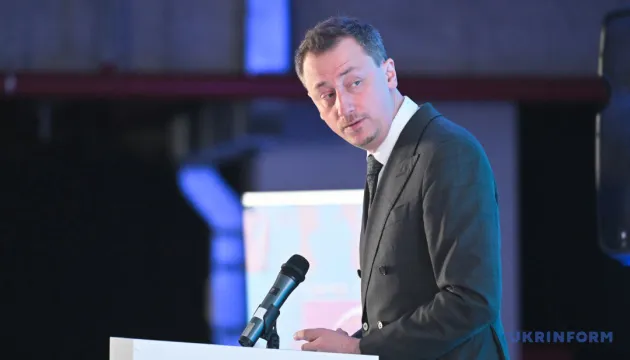
The introduction of the new Labor Code aims to establish modern rules in the labor market, provide clear guarantees for workers, and predictability for employers, as well as make employment more accessible and transparent.
This is reported by Finway
Updating Ukraine’s Labor Legislation
The Minister of Economy, Environment, and Agriculture Oleksiy Sobolev emphasized that updating labor legislation is an urgent step for the development of the Ukrainian economy. According to him, the adoption of the new code will serve as a tool for modern employment policy, implementing clear procedures for employers and guarantees for workers in the legal labor market.
“Ukraine cannot further delay the update of labor legislation. We need to support the framework in the first reading and continue working on the Labor Code in parliament. This code is one of the tools of our new employment policy. It should provide modern rules for legal employment, clear guarantees for workers, and predictable procedures for employers.”
According to the minister, approximately 31 million people live in the territory controlled by Ukraine, of which about 13 million are employed, while only 10.5 million citizens pay the unified social contribution. Additionally, around 2.3 million people with disabilities are excluded from the labor market, and another 800,000 people under 60 receive pensions but do not work. A significant portion of women and youth also face barriers to employment.
Expected Outcomes of the Reform
Oleksiy Sobolev stressed that actual employment in the labor market remains below the needs of the economy. Therefore, the new Labor Code is intended not only to formally update the rules but also to ensure transparency, legality, and convenience in employment. The government expects that the implementation of new norms will create 302,000 official or formalized jobs, and the net fiscal effect of the reform will reach 43.4 billion hryvnias annually.
The transition to labor contracts instead of employment books will allow businesses to save about 5.3 billion hryvnias, and the introduction of electronic document management will provide up to 226 million hryvnias in direct administrative savings each year.
For workers, an increase in annual paid leave by 4 days is planned, as well as legislative regulation of remote, home-based, seasonal, domestic work, and flexible schedules. Employers will receive more legal employment models according to their needs, which will help reduce legal uncertainty and the risks of labor disputes.
Among the initiatives of the authors of the new Labor Code is a change in the approach to setting the minimum wage, which will now be tied to the average wage in the economy.

The adoption of the new labor legislation is also part of Ukraine’s Euro-integration course, as the draft code implements European and international labor standards.
As Sobolev emphasized, the government intends to attract an additional 4.5 million people to the labor market by 2035, primarily citizens of Ukraine. The new code creates a legal framework to achieve this goal, and its adoption in the first reading by parliament is expected this month for further refinement.
The Cabinet of Ministers approved the draft Labor Code of Ukraine, which the Ministry of Economy team has been working on for over two years in collaboration with businesses, trade unions, academics, and international partners. The committees of the Verkhovna Rada on education, science, and innovation, as well as environmental policy and natural resource management, have already supported this document for adoption as a basis.