

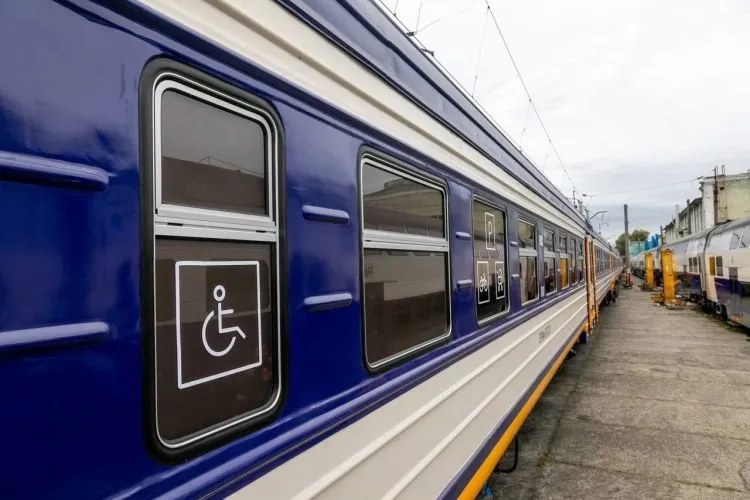
The Russian Federation has intensified strikes on Ukraine’s railway infrastructure, causing significant damage not only to the transportation system but also to the economy as a whole. All links in the railway network, which accounts for over 60% of freight transport, as well as the transportation of military supplies and weaponry to the front lines, are under threat.
This is reported by Finway
Damage and Consequences of the Attacks
According to “Ukrzaliznytsia,” since the beginning of 2025, the number of attacks by Russia on railway infrastructure facilities has exceeded 1,100. This is nearly equal to the total number of attacks in 2023 and 2024 combined. Trains, dispatch towers, depots, bridges, and substations that provide electricity are being targeted. The total amount of damage incurred since the start of the full-scale invasion has reached $5.8 billion, while the costs of restoration could be significantly higher.
“This is a war on the railways, which represents a deliberate, structured, well-planned, and concentrated attempt to disrupt the operation of the system,” said the head of “Ukrzaliznytsia,” Oleksandr Pertzovsky. – “Practically every link in the chain is under attack.”
Strategic Importance and Security Measures
The railway has become a symbol of Ukraine’s resilience, especially after the closure of airspace in 2022 and the overload of roadways. It is by rail that millions of Ukrainians have been able to evacuate to safe regions. Foreign delegations and world leaders arrived in Kyiv through railway stations to show support for Ukraine.
Previously, Russia had partially refrained from striking the railway network, hoping to utilize it in the event of occupation. However, now, seeking to pressure Kyiv into accepting favorable peace terms, the Russian Federation has focused its attacks on this critically important infrastructure.
To enhance security, “Ukrzaliznytsia” is implementing a series of measures. In particular, train drivers on routes to Kherson are wearing protective helmets, and carriages are equipped with counter-drone systems. Many substations are protected by concrete structures to reduce the risk of destruction from explosions. At the same time, at some stations, such as Lozova in the Kharkiv region, the options for protection remain limited.
The station master of Lozova, Nina Zabela, stated:
“We simply drop everything when the air raid siren sounds. The priority is saving lives.”
Recently, there have been several high-profile incidents. On December 22, near Korosten, a freight train derailed after reportedly being struck by a Shahed drone, causing delays for several services. On December 19, a drone attack led to the suspension of suburban trains in Odesa and the surrounding area. Such incidents indicate the systematic nature of Russia’s attacks on railway infrastructure and pose serious challenges for the stable operation of transport in Ukraine.