

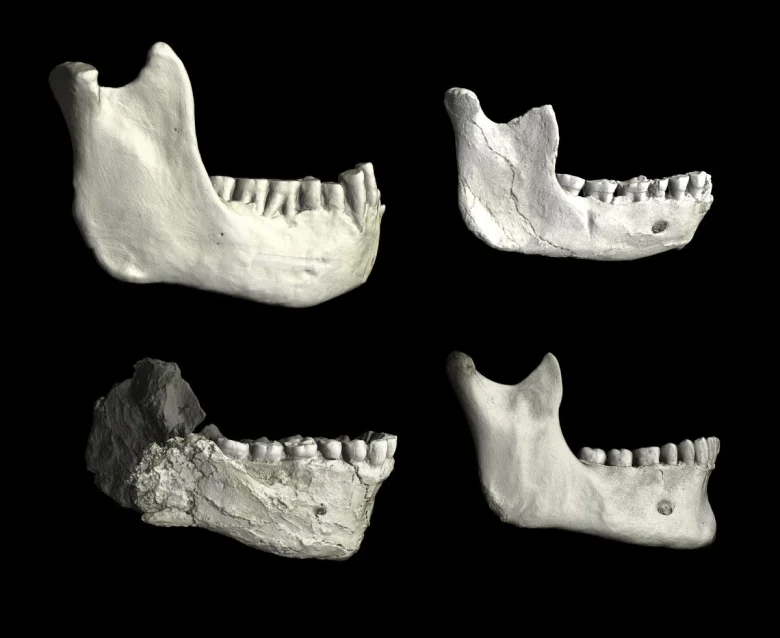
Archaeologists have made a unique discovery on the Atlantic coast of Morocco that could significantly expand modern understanding of human evolution. In the Thomas I quarry, an international team of researchers uncovered hominin fossils approximately 773,000 years old, which belong to some of the oldest known ancestors of Homo sapiens.
This is reported by Finway
Details of the Discovery and Research Methods
For over three decades, the scientific program Préhistoire de Casablanca has been studying these areas. As researcher Abderrahim Mohib notes, prolonged international collaboration and the unique geological properties of the region have preserved these unique artifacts. The results of the research were published in the journal Nature. The age of the remains was determined using the method of magnetostratigraphy, which is based on the analysis of changes in the Earth’s magnetic field. The scientists focused on the Brunhes-Matuyama boundary—a significant chronological marker of the Quaternary period—that allowed for precise dating of the fossils and placed them at the beginning of the evolutionary branch from which Homo sapiens, Neanderthals, and Denisovans later emerged.
Scientific Significance of the Discovery
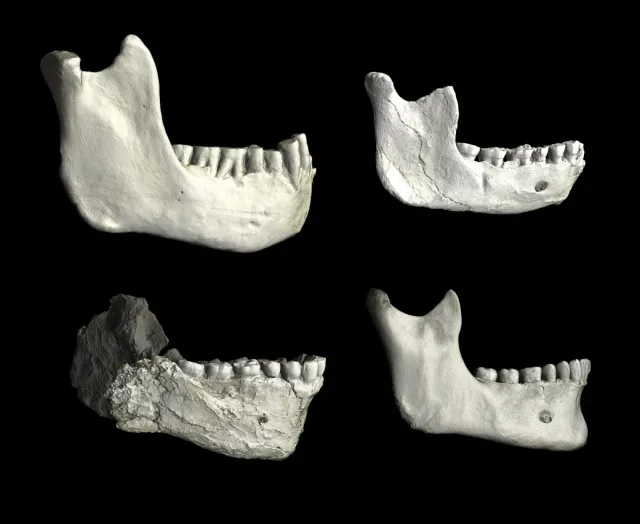
Morphological analysis of the lower jaws and teeth has shown that the discovered remains combine archaic and more modern traits, distinguishing them from Homo erectus and Homo antecessor. Research involving the Max Planck Institute for Evolutionary Anthropology has confirmed that the internal structure of the teeth indicates the basal position of these populations in the human genealogical tree. As anthropologist Matthew Skinner emphasizes, it is these features that set the findings apart from other known hominins.
“Data from Northwest Africa contradicts the notion of the Sahara as a constant biogeographical barrier during that period. This suggests that the region may have played a key role in the migrations and formation of early human populations,” highlighted paleontologist Denis Geraads.
Findings from the Hominidés cave have become some of the most compelling evidence of the deep African origins of modern humans. They help fill a gap in the evolutionary history of Homo and underscore the importance of North Africa as one of the centers of human formation.