

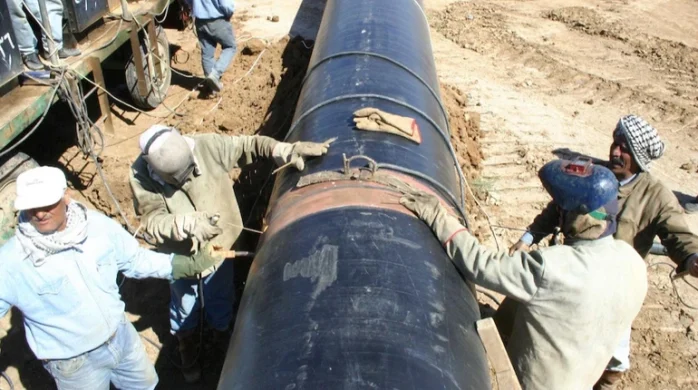
Gulf countries are considering large-scale projects to construct new oil pipelines across the Arabian Peninsula to minimize dependence on the Strait of Hormuz. For over a month, this strategically important maritime route has been blocked by Iran, significantly impacting oil exports from the region.
This is reported by Finway
East-West Pipeline: A Key Artery for Saudi Arabia
In response to the conflict between the U.S., Iran, and Israel, which has heightened attention to the security of oil routes, the significance of the East-West pipeline in Saudi Arabia has increased even further. This 1,200-kilometer pipeline, built in the 1980s as a safeguard against a potential closure of the Strait of Hormuz during the Iran-Iraq war, currently transports about 7 million barrels of oil daily to the port of Yanbu on the Red Sea coast, completely bypassing Hormuz.
“The pipeline is the main route we are currently using.”
This statement was made last month by Amin Nasser, CEO of the oil company Aramco, emphasizing the strategic role of this route for oil exporters in the region.
The Idea of a Network of Pipelines Instead of Separate Projects
Despite previous attempts to implement similar pipeline projects being repeatedly halted due to high costs and technical complexities, the current tensions in the region have prompted energy company executives and officials from Gulf countries to reevaluate their approaches. According to Maisoon Kafafi, a senior advisor at the Atlantic Council on Middle East issues, the most reliable solution is now considered to be the creation of not just one additional pipeline, but an entire network of transport corridors that will cover the entire region. She emphasized that implementing such a network will be the most challenging task, but this approach could ensure the stability of oil and gas exports in the future.
In the long term, new pipelines could not only facilitate the safe transportation of energy resources but also become part of global trade routes through which a wide range of goods will be transported from the Middle East.