

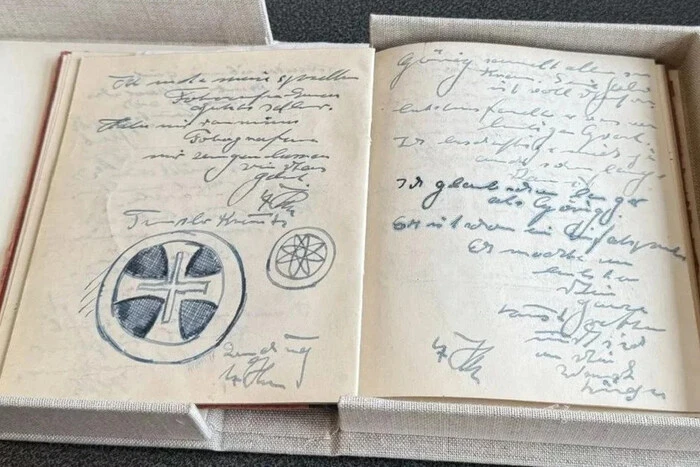
A notebook containing 113 handwritten pages has been discovered in an attic in Germany, which preliminary reports suggest may be the diary of Adolf Hitler. This document has already attracted the attention of researchers, as its content potentially includes personal notes from one of the most infamous dictators of the 20th century.
This is reported by Finway
Details of the Discovery and Expert Reactions
While the final authenticity of the notebook has not yet been confirmed, specialists note that the paper corresponds to the historical period when Hitler lived. The diary was sold for approximately £26,000 through the mediation of historian and publicist Olaf Haubold. He facilitated the agreement between the seller and the collector, who has become the new owner of the find.
Haubold first encountered the document in 2008 when an elderly man approached him with an offer to sell materials allegedly originating from Hitler’s archive. He recounted his initial reaction to the proposal:
“At first, it seemed suspicious to me, but I asked to see samples. He brought a notebook and several documents that appeared genuine at first glance. Since I do not have professional expertise in this area, I consulted historians, and we concluded that authenticity was possible,” said Haubold.
However, the historian was unsettled by the seller’s reluctance to disclose detailed information about the diary’s origin. The explanation of it being a “find in the attic,” he said, was rather vague.
Content and Historical Context of the Document
Some elements of the notebook, such as the presence of stamps from the Ministry of State Security of the former GDR – the “Stasi,” may support its authenticity. It is possible that some materials could have made their way into the notebook from the archives of this agency.
The diary contains entries that, according to researchers, reveal Hitler’s personal experiences. In particular, it discusses his alleged infatuation with the famous German actress Marlene Dietrich, who was considered a traitor by the Nazis for her anti-Nazi views and collaboration with the United States. In one fragment, the author of the notebook writes: “I think I have fallen in love with her,” and claims that he instructed intelligence services to make contact with the actress. Additionally, it mentions that he considered the possibility of forcibly returning Dietrich to Germany with the involvement of intelligence.
Experts emphasize that this is not the first instance of so-called Hitler diaries emerging. In 1983, the magazine Stern purchased similar documents that later turned out to be forgeries: two individuals were convicted of fraud, and the publication suffered financial losses amounting to millions of marks.
The question of the authenticity of the diary found in Germany remains open and awaits further examination.