

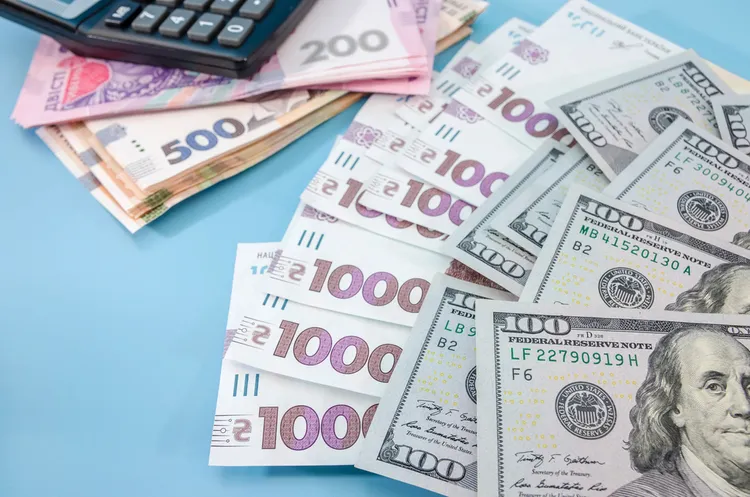
Leading banks on Wall Street forecast that the US dollar may lose ground by the end of 2026. Experts believe that the reason will be a change in the monetary policy of the largest central banks in the world: the US Federal Reserve is likely to continue easing its monetary policy, while the European Central Bank will keep rates stable, and the Bank of Japan will gradually raise them.
This is reported by Finway
Key Factors for Dollar Weakness
Analysts from Deutsche Bank, Goldman Sachs, Morgan Stanley, and other financial institutions emphasize that a key element for the dollar’s decline will be the yield gap between markets. Higher rates in countries outside the US encourage investors to sell American assets in favor of those that offer better returns. As a result, according to consensus forecasts, the dollar could depreciate by approximately 3% against major currencies such as the yen, euro, and British pound by the end of 2026.
“Markets have ample opportunities to account for a deeper cycle of tightening,” said David Adams, head of G-10 currency strategy at Morgan Stanley. “This leaves plenty of room for further dollar weakness.”
The decline is expected to be less sharp than in 2025, when the dollar lost nearly 8% of its value — the largest annual drop since 2017. However, forecasts remain dependent on the situation in the US labor market, which is currently showing resilience.
Political and Market Risks for the Dollar
Traders consider two more rate cuts by the Fed in 2026, each by a quarter percentage point, to be likely. Experts pay particular attention to the political factor: a potential new Fed chair may be more susceptible to pressure from the White House for further easing of policy. This creates additional risks for the dollar.
A weaker dollar could boost American exports, but at the same time, it will make imports more expensive for consumers in the US. For global markets, this means a greater influx of capital into countries with higher rates, especially in emerging markets. According to JPMorgan and Bank of America, the Brazilian real, South Korean won, and Chinese yuan have the most potential. Goldman Sachs also highlights the prospects for the Canadian and Australian dollars due to strong macroeconomic indicators.
Some analysts believe that the dollar tends to depreciate when the global economy is growing, but not everyone on Wall Street agrees with this pessimistic scenario. Citigroup and Standard Chartered emphasize that the growth of the US economy, particularly due to advancements in artificial intelligence, could once again attract investments. According to the Citigroup team, there is “significant potential for a dollar recovery cycle in 2026.”
At the same time, even Deutsche Bank acknowledges that the dollar is currently overvalued. If forecasts come true, it would mark the end of a prolonged period of strengthening for the American currency over the past decade.