

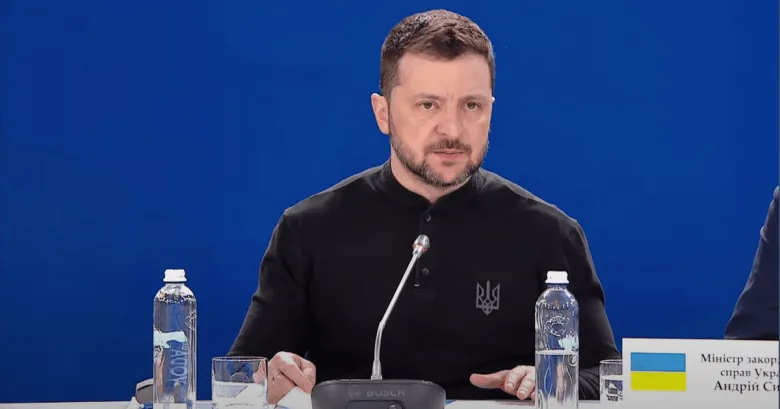
Ukrainian President Volodymyr Zelensky stated that he cannot comment on negotiations between the parties during peace talks, especially regarding the possible renaming of Donbas to ‘Donnyland’.
This is reported by Finway
Zelensky’s Position on the Names of Donbas
The head of state emphasized that what matters most to him is that the Donetsk and Luhansk regions remain Ukrainian land. He stressed that he exclusively uses official names in his work: ‘Donetsk Oblast’, ‘Luhansk Oblast’, ‘our Donbas’, ‘territory of Ukraine’.
“During my negotiations, there are no other terms besides Donetsk Oblast, Luhansk Oblast, our Donbas, territory of Ukraine; there are no other terms, and there are documents that specify all of this. As for other names, I cannot comment on any dialogues between the parties. In my opinion, the main thing is that Donetsk Oblast and Luhansk Oblast remain Ukrainian land, so there is no ‘Putinland’,” said Volodymyr Zelensky.
The Idea of ‘Donnyland’ and Politicians’ Reactions
On April 21, The New York Times published an article stating that during informal contacts with the team of U.S. President Donald Trump, Ukrainian officials considered the possibility of renaming the Ukrainian-controlled part of Donbas to ‘Donnyland’. This initiative aimed to draw the attention of the United States to the region and stimulate Washington to take a more active role in the negotiation process with the Russian Federation.
The name ‘Donnyland’ is a reference to U.S. President Donald Trump. Similar approaches have been used in international politics before: for example, Poland proposed to build a U.S. military base named ‘Fort Trump’, and Armenia and Azerbaijan, after signing a peace agreement at the White House, named a new transport corridor ‘Trump’s Path for International Peace and Prosperity’.
Volodymyr Zelensky also emphasized that Russia’s fear of U.S. President Donald Trump cannot be seen as a guarantee of security for Ukraine. The president highlighted the necessity of having international partners present on the front line, as this is the only way to ensure an effective mechanism for deterring potential new aggression.