

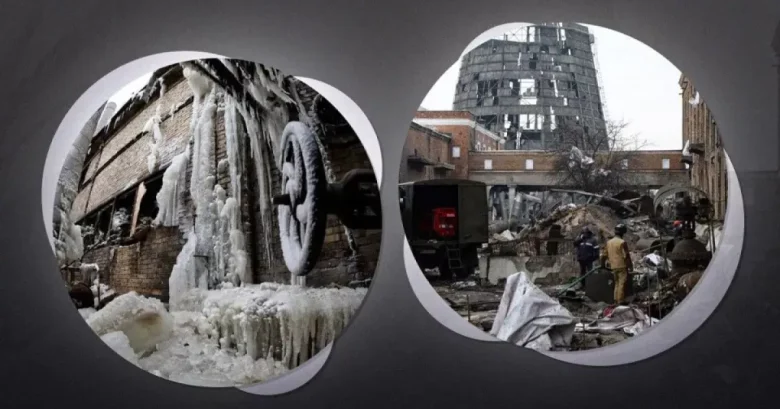
The massive shelling of energy infrastructure has put Kyiv in a difficult situation: in addition to problems with electricity supply, residents of the left-bank districts of the capital may be left without heat. Significant damage to the Darnytsia Combined Heat and Power Plant (CHP) poses a real threat to the heating season, which could result in hundreds of thousands of city dwellers finding themselves in cold apartments.
This is reported by Finway
Condition of the Darnytsia CHP and Challenges of Restoration
The Darnytsia CHP provided heat to a significant part of the Dnipro and Darnytsia districts – over a thousand high-rise buildings. After the missile strike, water had to be drained from the heating systems to avoid pipe damage due to freezing. Experts emphasize that it will not be possible to fully restore the CHP in the coming months, and the city authorities have already warned of electricity supply limitations for Kyiv residents to 1.5–2 hours per day due to capacity shortages following the attacks.
“According to experts, the full restoration or construction of a new combined heat and power plant is a complex engineering project that could take 5–7 years and cost about 100 million euros.”
The complexity of the situation is further exacerbated by the fact that some of the equipment was manufactured during the Soviet era, and there is a critical shortage of qualified specialists for such a volume of work in Ukraine.
Possible Ways to Ensure Heating in Winter
The only real alternative for the next heating season, experts say, is decentralized heating. This involves the construction of modern district gas boiler houses, each serving several dozen buildings. For areas with a population of 400,000–500,000 people, 8–10 large boiler houses will be needed, which will connect to existing networks.
In addition, Kyiv is already implementing temporary solutions: mobile boiler houses are being deployed near socially important facilities, heating points are being set up, and hospitals and schools are being provided with generators. Although these measures do not fully resolve the problem, they help to survive the coldest days.
It is currently impossible to abandon centralized heating in Kyiv, especially in densely populated areas such as Pozniaky and Osokorky. Individual heating in the apartments of most buildings is technically complex, too expensive, or even dangerous for the networks. Electric heating is also not considered due to the critical load on the energy system.
Prospects for the Next Heating Season
Whether there will be heat next winter depends on the intensity of new shelling and the pace of installing local boiler houses. Theoretically, it is possible to partially update equipment or replace it with local solutions within 9 months, but there are currently no guarantees.
Kyiv is forced to rapidly change its approach to heating: large CHPs are becoming targets during the war, and the city is compelled to implement a mixed model with centralized, district, and backup heating. The speed of implementing these alternatives will determine whether Kyiv residents can expect warm radiators in their homes next winter.