

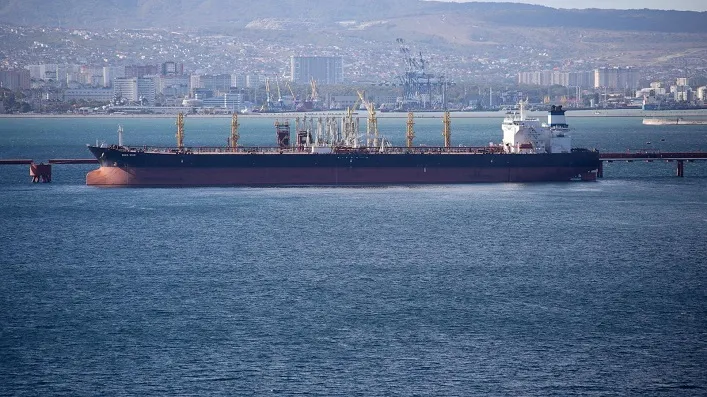
For the first time, Ukrainian drones struck a Russian tanker from the so-called shadow fleet in neutral waters of the Mediterranean Sea, approximately 2,000 kilometers from Ukrainian territory. The target of the attack was the tanker QENDIL, which Russia used to circumvent international sanctions. The Security Service of Ukraine emphasized that it considers this tanker a fully legitimate target, as it was involved in illegal schemes related to oil exports.
This is reported by Finway
Consequences of the Attack and Impact on Russian Exports
During the special operation, there was no cargo on board the Russian tanker, eliminating risks to the ecology of the Mediterranean region. After being hit, QENDIL sustained critical damage and can no longer perform its functions.
“The Security Service of Ukraine has for the first time struck a shadow fleet tanker of the Russian Federation with aerial drones in neutral waters of the Mediterranean Sea. The affected tanker QENDIL was used by Russia to circumvent sanctions, so the SBU considers it a completely legitimate target.”
Experts note that intensive strikes on the shadow fleet could lead to the disruption of major routes for transporting Russian oil. This, in turn, could significantly impact export volumes and revenues for the Russian Federation. According to estimates, the Russian shadow fleet transports about 3.7 million barrels of oil daily, which accounts for approximately 65% of maritime exports and brings the aggressor country between $87 and $100 billion annually.
Route Changes and Further Strikes
In light of the attacks, Russia has begun changing its oil transportation routes. Now, tankers carrying Russian oil through the Black Sea are opting for paths closer to the coasts of Georgia and Turkey to minimize the risk of being targeted by Ukrainian maritime drones. Meanwhile, Russian President Putin assures that such strikes will not affect supplies, although he threatens a response to Ukraine’s actions.
Ukrainian operations are not limited to maritime targets. Recently, SBU drones struck two Russian Su-27 fighter jets at the Belbek airfield in Crimea, with a total estimated value of $70 million. Ukrainian forces also successfully hit a patrol ship of the “Okhotnik” project and a drilling platform in the Caspian Sea. Additionally, one of the largest ammonia production chemical plants in the world, “TolyattiAzot” in the Samara region, was targeted.
In the Volgograd region, the main gas pipeline “Central Asia – Center” was put out of commission. This pipeline is crucial for Russia’s import of up to 12 billion cubic meters of gas annually. In recent years, Moscow has used it in reverse schemes, purchasing gas from Kazakhstan and Uzbekistan to meet local needs. Currently, gas transportation via this route has been completely halted.