

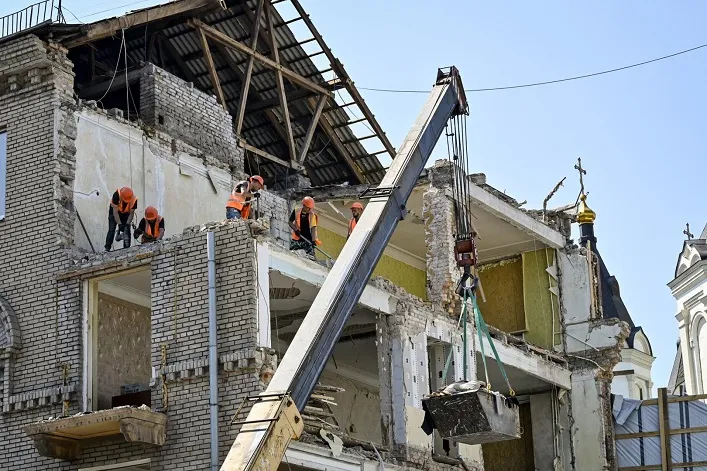
Ukraine has directed approximately $20 billion towards purchases for the construction and reconstruction of infrastructure facilities over more than three years of full-scale war. During this time, 46% of medical institutions and 28% of schools affected by the aggression of the Russian Federation have been restored, while compensation payments for destroyed housing have exceeded $1 billion.
This is reported by Finway
Main Areas of Construction Purchases
In 2023-2024, the annual volumes of construction purchases amounted to approximately ₴300 billion, and this level is expected to be maintained in 2025. These funds cover both the restoration of destroyed facilities and other tenders in the infrastructure sector. Among the largest projects are the repair and maintenance of roads in various regions, the construction of water pipelines for Kryvyi Rih, Marhanets, and Mykolaiv, the restoration of schools and hospitals, as well as the strengthening of energy infrastructure.
Challenges in Recovery Pace and Funding
Despite significant investments, the pace of recovery significantly lags behind the scale of destruction, largely due to insufficient funding. By the end of 2024, total losses from the destruction of housing and infrastructure were estimated at $80 billion, while the needs for complete recovery reached $190 billion. Additionally, bureaucratic procedures and a low level of competition during procurement processes reduce the effectiveness of the work.
“46% of medical institutions and 28% of schools damaged by Russian aggression have been restored, with over $1 billion in compensation paid for destroyed housing.”
Among the leaders in construction purchases are Kyiv, Kyiv Oblast, Vinnytsia, Dnipropetrovsk, Kharkiv, and Odesa regions. To enhance the effectiveness of recovery, experts recommend improving procurement procedures and oversight, planning expenditures several years in advance, and considering the priorities of local communities.