

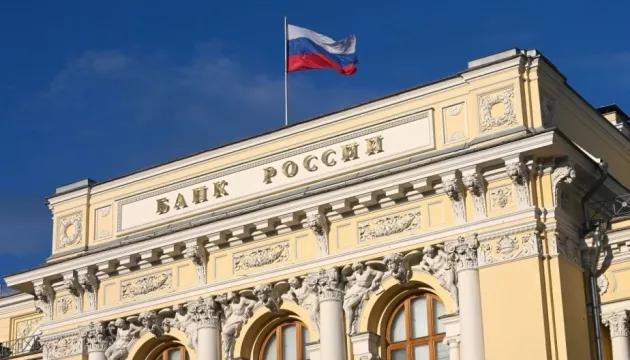
The Central Bank of the Russian Federation has revised its forecasts for oil prices, significantly raising its outlook for the coming years. Despite this, the estimates for GDP growth and inflation remain unchanged, indicating the persistence of macroeconomic risks for the country.
This is reported by Finway
Changes in forecasts: oil prices rise, other indicators unchanged
In the updated macroeconomic forecast released after the April meeting on the interest rate, the Central Bank of Russia raised the expected oil price for 2026 from $45 to $65 per barrel, and for 2027 from $50 to $55. The reasons for this revision include the escalation of the situation in the Middle East and rising oil prices. At the same time, forecasts for gross domestic product and inflation remained unchanged, despite improvements in the external environment for Russia.
Central Bank’s reaction and impact on the economy
Instead of easing monetary policy in response to rising oil revenues, the regulator raised the projected average key interest rate for 2026 by one percentage point to 14.0–14.5%. This is explained by the fact that additional revenues from oil exports through government spending stimulate domestic demand, and along with it, inflation. Thus, higher oil revenues do not contribute to lowering the cost of loans; on the contrary, they prolong the period of high rates.
This approach by the Central Bank demonstrates Russia’s structural dependence on the raw materials sector and its inability to break out of this vicious circle even in the context of rising oil prices. Against the backdrop of slowing economic activity and a 0.5% decline in GDP in the first quarter, the pro-Kremlin Center for Macroeconomic Analysis and Short-Term Forecasting proposed changing the mandate of the Central Bank to consider not only inflation but also the overall state of the economy. There are also ideas about partially limiting the regulator’s independence and strengthening the coordination of its decisions with the government.
“The overall signal of the updated forecast is that the Moscow authorities do not expect a quick normalization of relations with the West and do not plan to ease monetary pressure. On the contrary: the higher the oil revenues, the greater the risk of inflationary overheating, and the fewer reasons there are to lower rates,” stated the SBER.
Due to sanctions and political isolation, Russia has become a space for forced substitutes for former foreign companies, widespread parallel imports, and constant price increases, which further complicates the fight against inflation and economic challenges.