

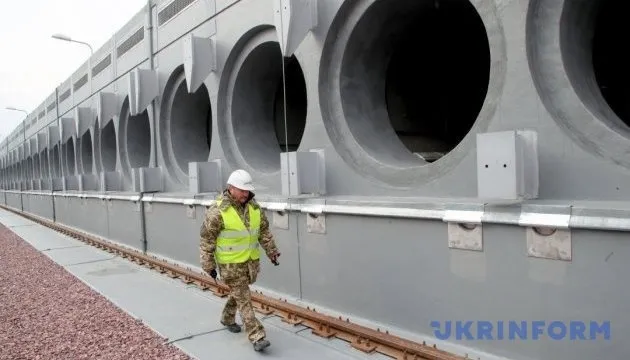
Since 2021, the process of transferring spent nuclear fuel from the ‘wet’ storage facility (SVYAP-1) to the modern ‘dry’ storage facility (SVYAP-2) has been ongoing at the Chernobyl Nuclear Power Plant. During this period, 29% of all fuel assemblies, approximately 6,000 units, have already been moved.
This is reported by Finway
Advantages and prospects of the new storage
As emphasized by the General Director of the State Enterprise “Chernobyl NPP” Serhiy Tarakanov, there are two storage facilities for spent nuclear fuel at Chernobyl: the ‘wet’ type SVYAP-1 and the ‘dry’ type SVYAP-2, which is characterized by modernity and a higher level of safety. The transfer of fuel is taking place despite the complex consequences of occupation and hostilities in the region.
“Our task is to move the fuel from SVYAP-1 to SVYAP-2. Despite the consequences of the occupation and the war, we continue this process. As of today, 29% of the fuel has been transferred (since 2021 – ed.) – approximately 6,000 assemblies,” said Tarakanov.
It is estimated that if 2,000 fuel assemblies are transported each year, the entire transfer process will be completed within the next eight years. One of the key advantages of SVYAP-2 is that it does not require connection to the power grid for the long-term storage of spent nuclear fuel, which enhances the safety of the facility in emergency situations.
Operational lifespan and project cost
The license for the operation of the ‘dry’ storage was obtained in April 2021. SVYAP-2 ensures the safe storage of spent nuclear fuel from Chernobyl for the next 100 years. The construction cost of the facility amounted to 412.818 million euros.
During the operation of the Chernobyl NPP from 1977 to 2000, over 21,000 fuel assemblies were accumulated, which are currently located in SVYAP-1. This storage is not intended for long-term storage, and its operational lifespan is limited. Therefore, all spent fuel must be transferred to the new interim ‘dry’ storage, which will enhance the nuclear and environmental safety of the region.