

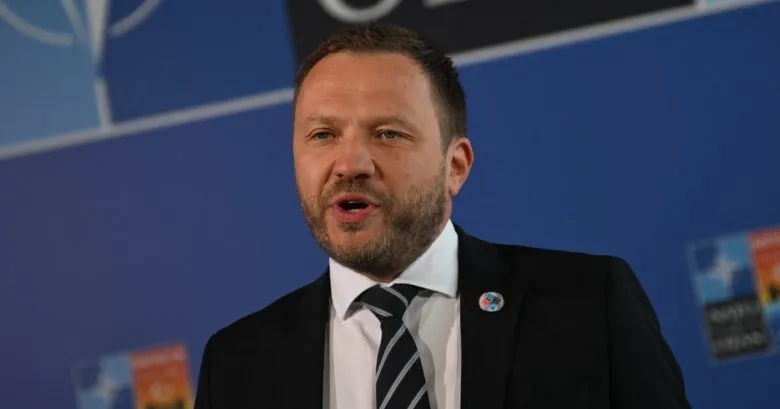
The Estonian government has decided to strengthen sanctions against Russian liquefied natural gas by expanding restrictions on its import and purchase. This initiative was proposed by Foreign Minister Margus Tsahkna, who emphasized the need for a complete ban on the import of liquefied natural gas (LNG) from Russia.
This is reported by Finway
Expansion of Sanctions and New Market Rules
Previously, Estonia allowed the purchase and import of Russian LNG only if it was not used in the national distribution network. According to the new changes, the ban will extend to all liquefied natural gas from Russia, regardless of its further application, including outside the distribution network.
“As soon as the proposed amendment comes into effect, the import ban will also apply to liquefied natural gas outside the distribution network,” he stated.
The minister emphasized that Russia continues its war against Ukraine and destabilizes international security, therefore Tallinn will continue to work on increasing the cost of aggression for the Russian Federation and finding ways to reduce its revenues.
Timelines and Expansion to Belarusian Imports
According to the government’s decision, the new sanctions will come into effect on January 1, 2026, giving market players enough time to adapt to the updated requirements and reorganize their operations. Similar restrictions will also be applied to the import of liquefied natural gas from Belarus.
Government representatives estimate that due to the negligible volumes of Russian LNG imports, the new measures will not have a significant impact on the economy or the business environment of the country.
It is worth noting that back in September 2022, Estonia imposed a preliminary ban on the import and purchase of liquefied gas from Russia, which concerned the transfer of gas and its use in the state’s distribution networks.