

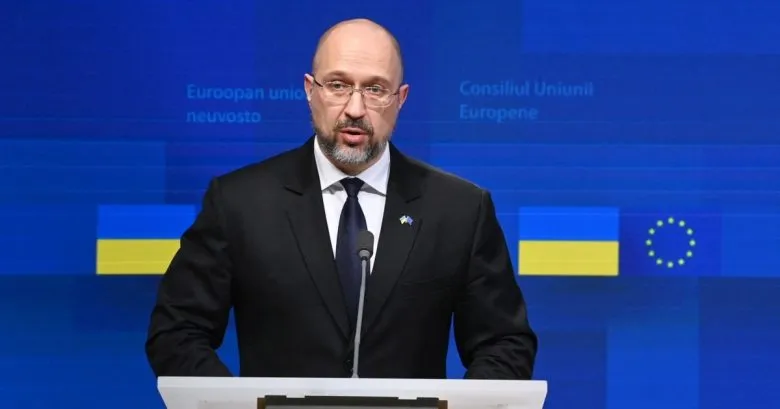
Ukrainian Prime Minister Denys Shmyhal emphasized the need to maintain trade liberalization between Ukraine and the European Union during a business forum in Brussels. According to him, this agreement is already bringing significant benefits to both sides. “Last year, our trade volume exceeded 60 billion dollars. Ukraine itself imported goods from the EU worth over 35 billion. This is yet another testament that Ukraine is not only a reliable partner but also a large and growing market that strengthens the European Union,” he noted.
This is reported by Finway
Continuation of Economic Integration
Shmyhal stressed that deep economic integration between Ukraine and the EU should be enshrined in a new agreement. In particular, he called for the signing of the Agreement on Conformity Assessment of Industrial Products (ACAA) and the deepening of the strategic dialogue on sustainable development.
Recently, at a press conference following a meeting of the Ukraine-EU Association Council, the Prime Minister announced that Ukraine had appealed to the European Union to maintain the trade preferences granted due to Russia’s full-scale invasion, at least until the end of this year. The current preferences are set to expire in early June, so Ukraine is striving to secure them within the framework of the Association Agreement with the EU.
Discussion on the Future of Trade Preferences
European Commissioner for Enlargement Olivér Várhelyi stated that the issue will continue to be discussed, and by June 5, the European Commission is expected to present a proposal regarding preferences for Ukraine. According to preliminary reports from Western media, the European Commission is also preparing a plan for permanent trade liberalization with Ukraine, under which agricultural imports will be divided into three categories depending on their sensitivity to the EU market. Sensitive products may include goods whose imports are currently restricted by quotas, such as eggs, poultry, sugar, and honey.
In May 2022, the EU Council decided to abolish all tariffs and quotas on exports from Ukraine for one year to support the Ukrainian economy amid military aggression. However, despite these decisions, several EU countries, such as Bulgaria, Poland, Hungary, and Slovakia, imposed a temporary ban on the import of Ukrainian grain in April 2023 due to domestic pressure to protect local farmers.