

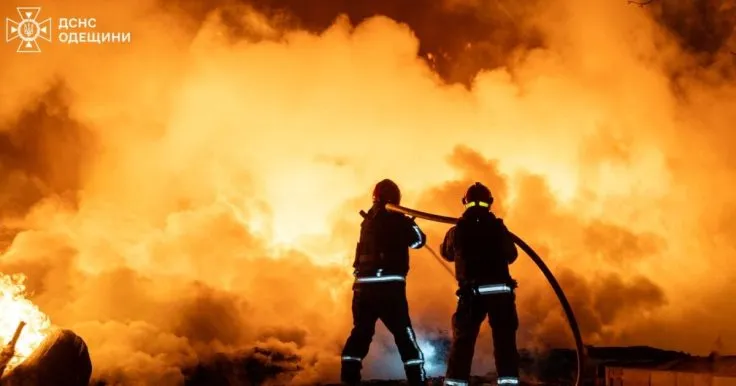
During the first four months of 2026, Russia carried out over 800 drone strikes on Ukraine’s port infrastructure. This is ten times the number of attacks during the same period last year, when 75 drone incidents were recorded. This was reported by the Deputy Prime Minister for Reconstruction – Minister of Community and Territorial Development Oleksii Kuleba.
This is reported by Finway
Increase in attack intensity and port resilience
Russia is targeting key facilities of the port infrastructure. Since the beginning of the full-scale invasion, over 900 port facilities have been damaged or partially destroyed, including 177 civilian vessels. Kuleba noted that despite the increase in attacks, Ukrainian ports continue to operate. Since the beginning of the year, nearly 30 million tons of cargo have already been transported through the ports.
“Ports remain among the key targets of attacks. Since the beginning of the full-scale invasion, over 900 port infrastructure facilities have been damaged or partially destroyed, including 177 civilian vessels. The intensity of drone attacks is increasing: if 75 UAVs were recorded in the first four months of last year, this year there are already over 800,” he wrote on Telegram.
Protective measures and international qualification of Russia’s actions
The minister emphasized that to ensure stable logistics operations and protect port infrastructure amid constant attacks, special air defense units have been created. These groups are mainly composed of port workers, many of whom are war veterans.
All regions of Ukraine regularly suffer strikes from various types of Russian weaponry: strike drones, missiles, guided aerial bombs, and multiple rocket launch systems. The Ukrainian authorities and international organizations qualify these strikes as war crimes of the Russian Federation, emphasizing their targeted nature.
Shelling of vital systems for the population and healthcare facilities, aimed at depriving people of electricity, heat, water, communication, and medical assistance, is classified by lawyers and researchers as genocidal actions. Among other manifestations of genocide documented by human rights defenders are public calls for the destruction of Ukrainians, persecution of pro-Ukrainian individuals in occupied territories, deportation of children to change their identity, and destruction of Ukrainian culture and historical artifacts.
According to the Convention on the Prevention and Punishment of the Crime of Genocide, adopted by the UN General Assembly in 1948, participating countries are obliged to prevent genocide and punish it regardless of whether war or peace prevails. Genocide is defined as actions aimed at the complete or partial destruction of a national, ethnic, racial, or religious group. Its signs include, among others, killings, causing serious bodily harm, creating conditions for physical destruction, prohibiting childbirth, or forcibly transferring children.
The Russian leadership denies accusations of targeted strikes on Ukraine’s civilian infrastructure; however, the facts of mass destruction of hospitals, schools, energy facilities, and water supply systems confirm the opposite.