

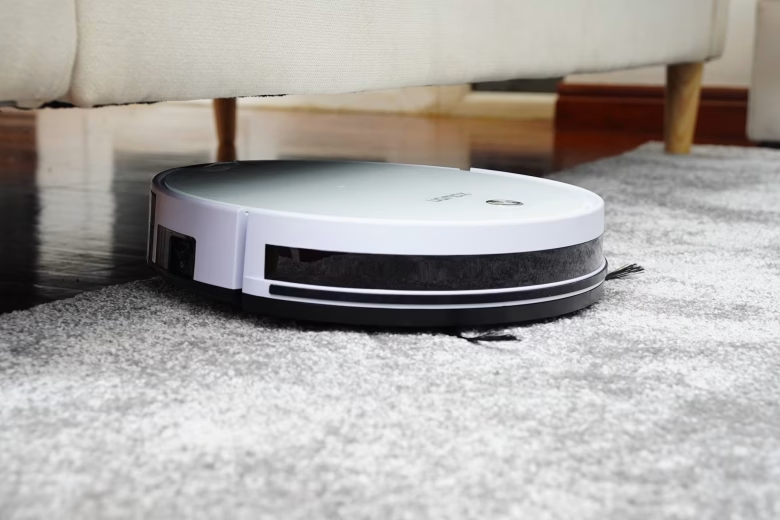
A robot vacuum cleaner is one of the most convenient and sought-after household devices that emerged in the 21st century. Silent and compact, it cleans floors independently without requiring human intervention. But can this round gadget completely replace a traditional vacuum cleaner? In this article, we will explore all the positive and negative aspects of robotic cleaning technology.
This is reported by Finway
Advantages of Robotic Vacuums
There are many advantages to robot vacuums:
- Automatic cleaning. This is perhaps the main advantage that makes the “smart” vacuum especially appealing. There’s no need to haul a heavy vacuum with a hose around the house—just set the route and press a button. Once started, the device operates independently, allowing you to attend to other tasks or even leave the house, returning to a clean apartment.
- Diverse functions. Unlike traditional models that operate in a single mode, Kärcher robot vacuums and other popular brands can adapt. They differentiate between floor types (laminate, tile, linoleum) and adjust suction power based on the level of dirtiness.
- Air filtration. Modern models are equipped with HEPA filters that not only collect dust and debris but also purify the air from allergens, microscopic particles, and harmful bacteria. As a result, the indoor environment becomes noticeably fresher and cleaner.
- Quiet operation and autonomy. The robot vacuum operates very quietly, not distracting people or scaring pets. It independently maps the room, considers obstacles, and avoids collisions with furniture, making cleaning safe for both the device and the interior.
- Mopping function. Some models can not only vacuum but also wash the floor. They are equipped with a water tank and a special microfiber cloth. The device dispenses liquid and gently wipes the floor, leaving no puddles or streaks.
Disadvantages of Robot Vacuums
There are fewer disadvantages to robotic cleaners:
- Inaccessibility of certain areas. Due to their round shape, the gadget cannot always reach corners or narrow gaps where dust typically accumulates. This reduces overall cleaning efficiency.
- Struggles with “problematic” debris. If a spilled drink, children’s slime, or pet waste ends up on the floor, the robot will not clean it up but will spread it throughout the apartment.
- Access issues under furniture. If the space under a sofa or bed is covered with a blanket, the robot will perceive this as an obstacle and will not go underneath.
Conclusion
A robot vacuum cleaner is excellent for everyday cleaning and maintaining cleanliness. If you’re not a fan of perfect order and can easily tolerate small “islands” of dust, this gadget can become your main assistant. However, if impeccable cleanliness is important to you, it’s better to combine it with a traditional vacuum cleaner—using the robot daily and doing a thorough clean on weekends.