

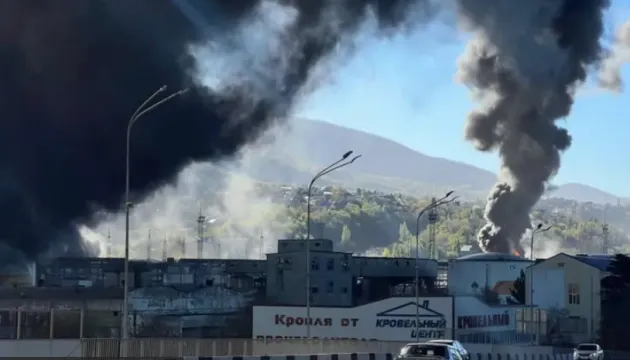
In May 2026, the number of Ukrainian drone attacks on oil refineries in the Russian Federation reached a historic high. As a result, oil processing volumes in Russia fell to their lowest level since October 2009, creating serious risks of fuel shortages in the domestic market and further price increases.
This is reported by Finway
Increase in Attacks and Impact on the Fuel Market
According to open information, in May, Ukrainian forces carried out at least 16 strikes on Russian fuel production facilities. Drones targeted eight of the ten largest oil refineries in the aggressor country. In total, over 30 attacks on Russian oil and gas infrastructure were recorded during the month, including export terminals, pipelines, pumping stations, and storage facilities. This is a record number since the beginning of Russia’s full-scale invasion of Ukraine.
The decrease in processing volumes forced the Russian government to urgently impose new restrictions: the export of aviation fuel was banned until the end of November, and the ban on gasoline exports was extended. These measures aim to stabilize the market situation and prevent a spike in prices at gas stations, as past fuel price increases have already caused social tension and contributed to inflation.
Production Cuts and Equipment Repair Issues
According to OilX analysts, in May, oil processing volumes in Russia fell to 4.58 million barrels per day, which is 700,000 barrels, or 13%, less than in May of the previous year. A significant portion of the attacks is aimed not only at primary units but also at secondary ones—complex and expensive systems whose repair is complicated by Western sanctions that restrict access to imported spare parts. As noted by Sergey Vakulenko, a researcher at the Carnegie Endowment,
“secondary units help oil refineries produce more gasoline and diesel fuel, but their repair can be much more complicated and expensive, as Western sanctions make it difficult to supply spare parts from abroad.”
The attacks have also led Moscow to increase crude oil exports to compensate for the loss of supplies from the Persian Gulf for its buyers.
At the same time, according to the St. Petersburg International Commodity Exchange, the volumes of premium gasoline offered for supply in the European part of Russia have fallen to 5,000 tons per day—only a third of last year’s figures. Exchange prices for this type of fuel have risen by more than 20% compared to last year.
This situation creates difficulties for independent gas station networks not affiliated with major oil companies, forcing them to purchase fuel at higher prices or seek alternative supply sources.
Despite this, official representatives of Russia assure the stability of the market. On May 21, Kremlin spokesman Dmitry Peskov explained the production cuts as seasonal maintenance and emphasized that the balance of fuel supply and demand is currently maintained. However, experts note clear signs of declining reserves and increasing risks of shortages in the coming months.
It is worth noting that the average price of gasoline has risen only slightly since the beginning of the year—by more than 2 rubles (0.03 dollars), reaching 67.53 rubles per liter. Partially, this stability is ensured by the fact that most gas stations belong to large producers who receive government subsidies, as well as due to restrictions on gasoline exports imposed since April 1.
As of the end of May, diesel fuel production in Russia decreased by approximately 10%, and infrastructure damage complicates the ability to build up reserves and creates additional challenges for the fuel market of the aggressor country.