

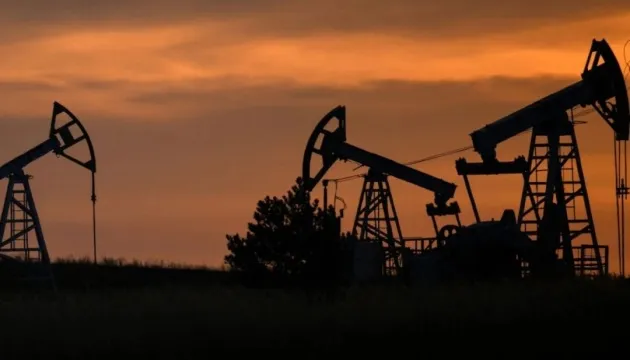
In April 2026, crude oil production in the Russian Federation decreased by 460,000 barrels per day compared to the same period last year. The average daily production rate was about 8.8 million barrels.
This is reported by Finway
Historical low of oil product exports from Russia
At the same time, the volume of oil product exports from Russia in April fell by 340,000 barrels per day compared to March, reaching 2.2 million barrels per day. This is the lowest export level recorded by the International Energy Agency (IEA) since monitoring began.
Notably, in March, oil exports from Russia actually increased by 250,000 barrels per day, totaling 4.9 million barrels. This spike is attributed to supply disruptions from the Persian Gulf due to the war in Iran, which led some buyers to shift to Russian oil. However, during the same period, Ukraine began a series of drone attacks on key oil refineries and ports in Russia.
“The overall volume of Russian exports recovered in the second half of April, but did not return to the three-week average prior to the attacks on the Baltic ports — this period was between the onset of the conflict in the Middle East and disruptions in the Baltic region — which peaked at 7.7 million barrels per day.”
Changes in export geography and recovery of supplies
According to the IEA, the partial recovery of exports in the second half of April is explained by an increase in maritime shipments through the Baltic Sea — by 190,000 barrels per day compared to March. There was also a partial recovery of pipeline supplies via the Druzhba pipeline to Hungary and Slovakia, which reached 60,000 barrels per day in the last week of April.
After the start of the war in Iran, Russia began actively seeking new buyers for Urals oil. In April, the average export of this grade to Egypt was 200,000 barrels per day, with a maximum weekly figure of 380,000 barrels recorded in the week ending April 20.
The IEA emphasizes that with Urals oil exports at 1.9 million barrels per day, Russia is gradually returning to pre-war export levels, indicating a nearing of maximum loading capacity of the infrastructure.
At the same time, at the end of April, oil exports from the port of Novorossiysk on the Black Sea sharply declined, leading to an overall drop in unloading volumes and a decrease in financial inflows to the Kremlin’s military budget.