

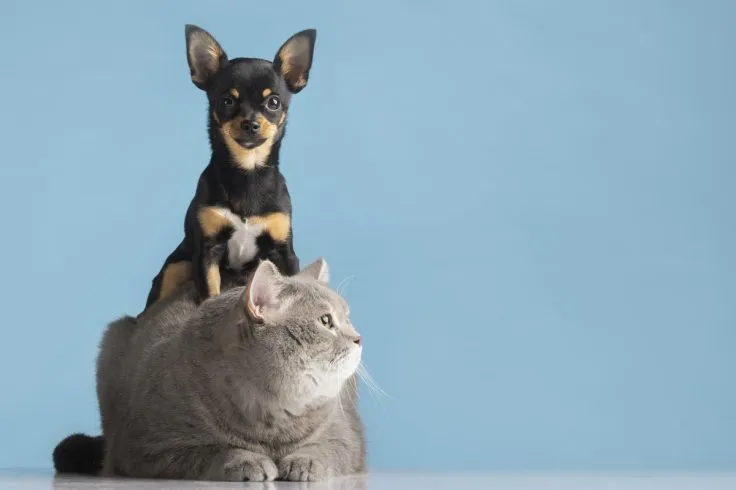
Starting March 1, 2026, a new law “On Veterinary Medicine and Animal Welfare” will take effect in Ukraine, establishing a number of obligations for cat and dog owners. However, many still do not understand which requirements have become mandatory and what remains at the owner’s discretion.
This is reported by Finway
Veterinary Passport: A Mandatory Requirement for Cats and Dogs
From now on, owners of all cats and dogs must provide their pets with a veterinary passport of a unified sample. This document contains information about the owner, the animal’s origin, its health, vaccinations, treatments, and preventive measures taken. The passport also includes a description of the animal — its name, breed, sex, age, color, as well as information about the presence of a microchip.
Fines are imposed for the absence of a veterinary passport. At the same time, for cats that do not leave the premises, no inspections are required — accordingly, obtaining a passport for them is voluntary and remains at the owner’s discretion.
Is Microchipping Mandatory for Animals?
In Ukraine, there is no general requirement for microchipping pets. Registration in the Unified State Register of Animals is done at the owner’s discretion.
However, there are two situations when microchipping becomes necessary:
- Compliance with city animal keeping regulations. For example, in Kyiv, owners are required to register their animal with the relevant KMDA authority to obtain a tag, and microchipping is a mandatory part of this process.
- Traveling abroad with an animal. For international movement of the animal, identification via microchip is a mandatory condition. Without this, it is impossible to obtain veterinary documents for crossing the border.
In Kyiv, the procedure for registering animals has become simpler: it can now be done through administrative service centers (ASCs).
“A microchip is a permanent identifier implanted under the animal’s skin. If a dog or cat gets lost and ends up in a veterinary clinic or shelter, the chip will allow for quick identification of the owner.”
It is worth noting that having a chip significantly simplifies the identification of the animal in case of loss, as well as confirming ownership rights and resolving registration issues.