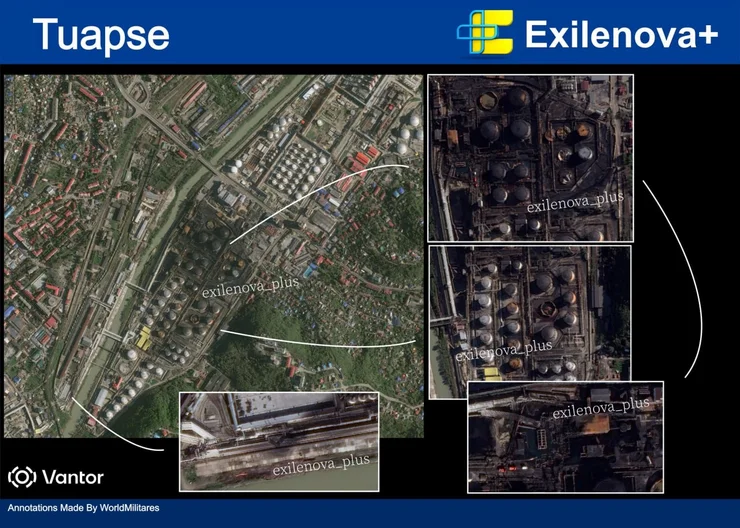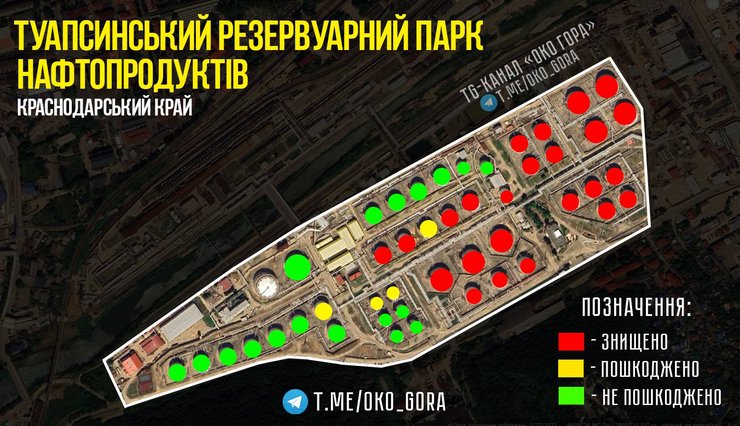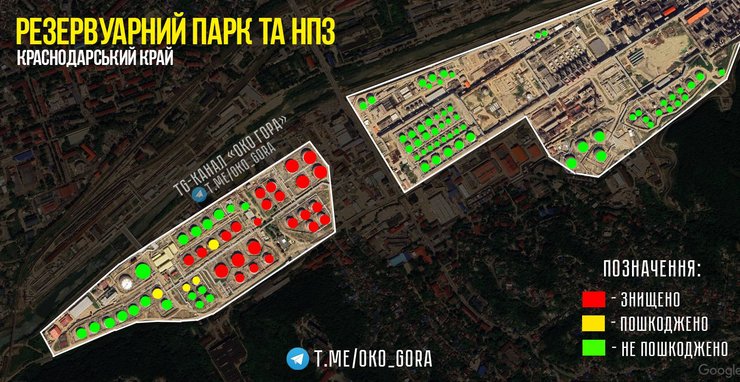
Ukrainian defense forces launched a series of strikes on the oil refinery in Tuapse, resulting in the destruction or significant damage of most of the facility’s tanks. According to the latest satellite images, only 18 out of 47 tanks remain intact.
This is reported by Finway
Extent of Damage at the Oil Refinery
The total capacity of the tank farm at the Tuapse Oil Refinery is 159,140 cubic meters. After the attack, satellite images were released by the OSINT channel on Telegram “Exilnova+”, clearly showing significant damage to the refinery’s infrastructure. According to the channel “Oko Gora”, 24 tanks were completely destroyed as a result of the strikes, which accounts for 52% of the total number. Another 4 tanks (9%) sustained varying degrees of damage. Only 18 tanks (39% of the fleet) survived without damage.
“Ukrainian military strikes on the oil refinery in Tuapse destroyed or damaged most of the tanks. Only 18 out of 47 remain intact.”
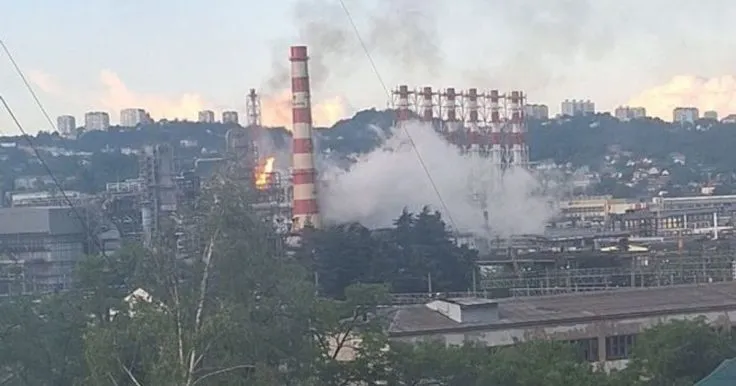
The published satellite photos reveal the scale of the destruction, as well as the aftermath of the fire on the site. Residents of the region are sharing photos and videos from the scene online, despite local authorities’ attempts to conceal information about the true extent of the damage.
Importance of the Tuapse Oil Refinery and Timeline of Attacks
The oil refinery in Tuapse is one of the most technologically advanced facilities of “Rosneft” and serves as a key export terminal in southern Russia. Oil is shipped for export through the Black Sea from this facility. The raw materials for the refinery come from Western Siberia, Orenburg, and Stavropol fields via the Tikhoretsk – Tuapse pipeline, as well as by rail, water, and road transport. The plant’s capacity allows it to process up to 12 million tons of oil annually with a processing depth of about 98%.
Strikes on the Tuapse refinery occurred, in particular, on the night of April 16 and 20. Following this, Russians reported numerous explosions and a large fire that lasted for several days. Local authorities are trying to minimize publicity and inform about recovery efforts, including reporting on the greening of the city even amid powerful fires and columns of black smoke rising over the industrial area.